
Philly Cheesesteak Casserole: A Skillet-to-Broiler Comfort Dinner With Pasta, Beef, and Provolone
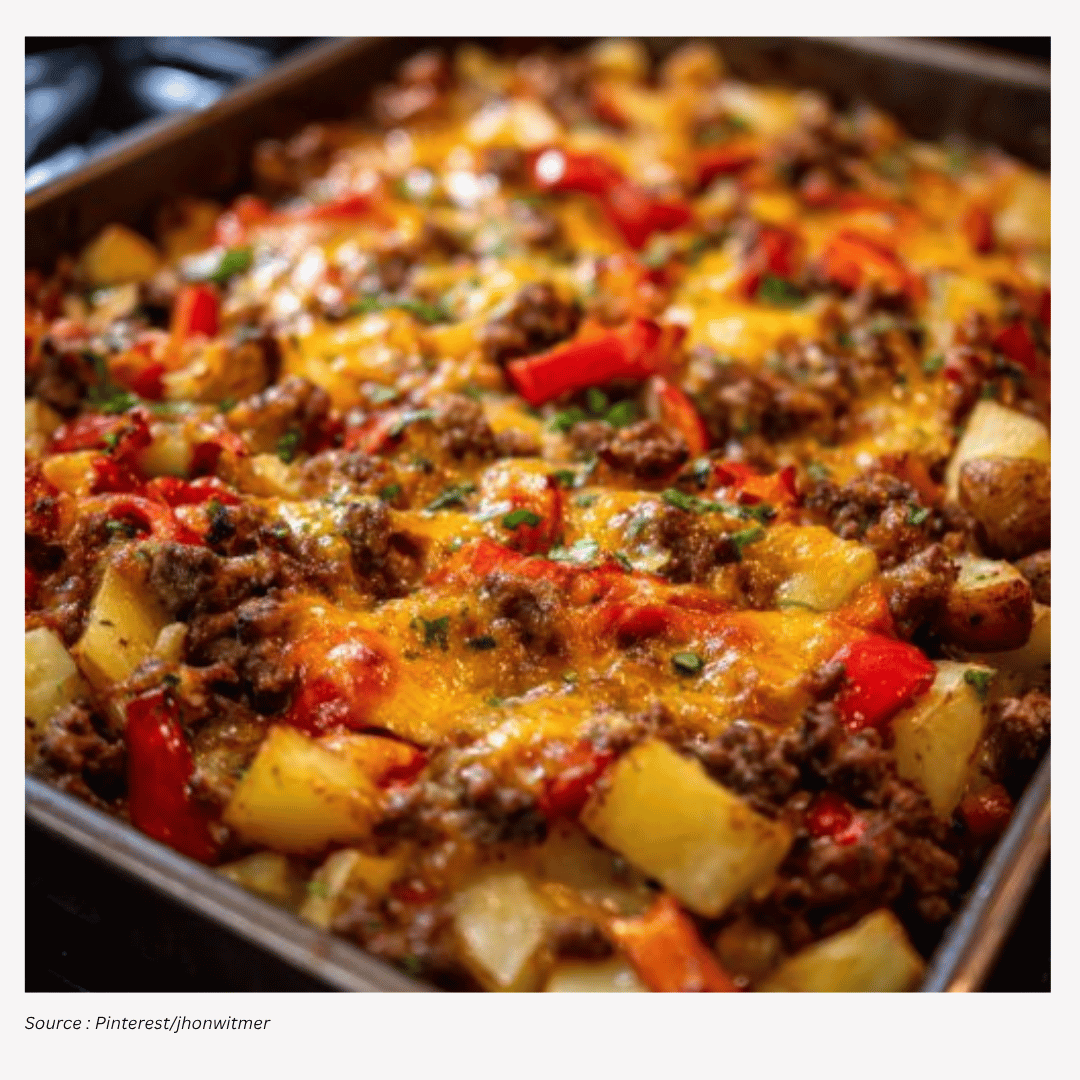
A Philly cheesesteak, reimagined for the dinner table
There are some dishes that feel instantly familiar, even when they show up in a new format. A Philly cheesesteak casserole is one of them: it takes the signature elements people love about Philadelphia’s famous sandwich—melt-in-your-mouth beef, vegetables cooked until tender, and a generous layer of cheese—and turns them into a pasta-based meal that’s designed to be served by the spoonful.
In sandwich form, a cheesesteak is often a personal, handheld indulgence. In casserole form, it becomes something you can set in the middle of the table and share. It’s the same comfort-food idea, just built for a group dinner, leftovers, or a make-ahead plan.
This version leans into the appeal of one-pan cooking. It begins on the stovetop in a skillet, where beef and vegetables are cooked together in butter. Pasta is then simmered directly in the same pan with broth, water, and Worcestershire sauce, creating a rich base without requiring multiple pots. The final step is all about the cheese: cream cheese is stirred in for creaminess, provolone is folded through for flavor, and the top is finished under the broiler until melted.
Why this casserole works as a one-skillet dinner
One-skillet meals are popular for a reason: they simplify cooking and cleanup while still delivering a complete, comforting dinner. This casserole follows that approach closely, moving from browning to simmering to broiling in a straightforward sequence.
The method also helps the flavors build in layers. Browning the beef and cooking the vegetables first creates a savory foundation. Simmering the pasta in broth and water brings everything together in the same pan, and the Worcestershire sauce adds depth to the overall taste. Finally, the cheese is introduced in two stages—stirred in for a creamy interior and layered on top for a classic melted finish.
If you enjoy skillet-style comfort food—think other hearty, all-in-one meals like chicken mac and cheese variations, enchilada-inspired skillets, or baked chicken-and-broccoli dinners—this cheesesteak-inspired casserole fits naturally into that rotation.
The flavor inspiration: classic cheesesteak elements
The heart of the recipe is its connection to the original sandwich. A traditional Philly cheesesteak is known for beef and melted cheese, often paired with cooked vegetables and served on bread. This casserole keeps the beef-and-cheese identity front and center, but swaps the bread for pasta and uses a creamy, cheese-forward sauce to tie everything together.
The result is a dish that aims to taste like the sandwich, but with a different kind of comfort: instead of a bite of bread and beef, you get a forkful of pasta coated in cheesy sauce, mixed with browned beef and vegetables, and finished with a broiled layer of provolone on top.
Ingredient flexibility and easy variations
Like many home-cooked casseroles, this dish is designed to be adaptable. The core idea—beef, vegetables, pasta, and cheese—can handle small ingredient swaps without losing the overall cheesesteak character.
While the complete ingredient list is typically organized in a recipe card, the main components and flavor-building steps are clear from the cooking method: beef and vegetables are cooked first; pasta is simmered in broth, water, and Worcestershire sauce; cream cheese and provolone are added at the end; and the top is broiled until melted.
If you like to personalize recipes, this is the kind of meal where you can adjust within that framework. The key is to keep the balance: a savory beef-and-vegetable base, enough liquid for the pasta to cook through, and a cheese finish that delivers the “cheesesteak” feel.
Step-by-step cooking method (skillet to broiler)
This casserole is built in stages, each one designed to keep the process simple while developing flavor.
- Brown the beef and cook the vegetables: In a skillet over medium heat, cook the beef and vegetables in butter until the beef is browned. Season with salt and pepper.
- Simmer the pasta in the same skillet: Add the pasta, broth, water, and Worcestershire sauce. Bring the mixture to a boil, then reduce the heat to a simmer. Cook for about 15 minutes.
- Make it creamy and cheesy: Stir in the cream cheese and half of the provolone, mixing until incorporated.
- Finish with a broiled cheese topping: Top with the remaining provolone and broil for 2–3 minutes, or until the cheese is melted.
That final broil is what gives the casserole its signature top layer—melted, cohesive, and ready to stretch slightly as you serve it.
Make-ahead option for busy schedules
This casserole can be assembled in advance, which makes it useful for weeknights, hosting, or simply planning ahead. You can prepare the dish up to 8 hours before serving and store it in the refrigerator.
When you’re ready to eat, reheat it in the oven at 325°F until warmed through. This approach keeps the meal flexible: you can do the hands-on cooking earlier in the day and finish it later with minimal effort.
Storing leftovers: fridge and freezer guidance
This is a practical dish for leftovers, and it holds up well with proper storage.
- Refrigerator: Store in an airtight container for about 3 days.
- Freezer: Keep for up to 3 months.
Because the casserole includes pasta and a cheese-based sauce, airtight storage helps maintain texture and prevents it from drying out.
Reheating methods: skillet, oven, or microwave
Leftovers can be reheated in a few different ways depending on your preference and the time you have.
- Skillet (preferred method): Reheat in a skillet. Another skillet-friendly approach is to add leftover pasta to the pan with a splash of water and cook on medium-low until heated through.
- Oven: Cover and bake at 325°F until warmed through.
- Microwave: Place in a microwave-safe bowl with a splash of water. Microwave for 1 minute, stir, then microwave for another minute (or until heated through).
The small splash of water is a simple but helpful detail, especially for microwave or skillet reheating, because it can loosen the sauce and improve the texture as it warms.
Serving ideas: what to pair with a cheesesteak-style casserole
This casserole is designed to stand on its own as a full meal—beef, pasta, vegetables, and cheese all in one skillet. Still, it can also be served alongside a variety of sides, depending on the occasion and how hearty you want the plate to be.
Because the dish is rich and cheese-forward, many people like pairing it with something that balances the meal. The specific side options can vary widely, and the casserole’s flexible nature means it can fit into different menus—from casual family dinners to game-day spreads.
Equipment considerations
Equipment can influence how smoothly the recipe comes together. Since the cooking method moves from stovetop simmering to broiling the cheese topping, using the right skillet matters. A broiler-safe skillet makes it easier to go directly from the stove to the broiler without transferring the pasta mixture to another dish.
Beyond that, the process is intentionally straightforward: a skillet for cooking and simmering, and an oven broiler for the final melt.
The appeal: familiar comfort, new format
At its core, this Philly cheesesteak casserole is about taking a beloved sandwich and translating its most recognizable traits into a pasta dinner. It keeps the beef-and-cheese satisfaction that makes a cheesesteak such a favorite, while offering the practicality of a casserole: it’s easy to portion, easy to store, and easy to reheat.
It also fits neatly into the broader category of weeknight comfort food—meals that deliver big flavor without complicated steps. From the initial browning to the final broil, the recipe is designed to be approachable, with clear stages and a payoff that’s all about that melted provolone on top.
If you’re the kind of cook who enjoys repurposing classic dishes into new forms, this is a natural candidate. It’s not trying to replace the original sandwich experience; it’s offering another way to enjoy the same flavor profile—this time with pasta, a creamy cheese base, and a skillet-friendly method that makes sharing (or saving leftovers) part of the plan.
And for anyone who likes exploring cheesesteak-inspired variations beyond the traditional roll, it sits comfortably alongside other playful adaptations, including cheesesteak-themed pizza—proof that the flavor combination is versatile enough to work well across formats.