
Carne Asada Nachos for a Crowd: Layered Chips, Marinated Steak, and Melty Cheese
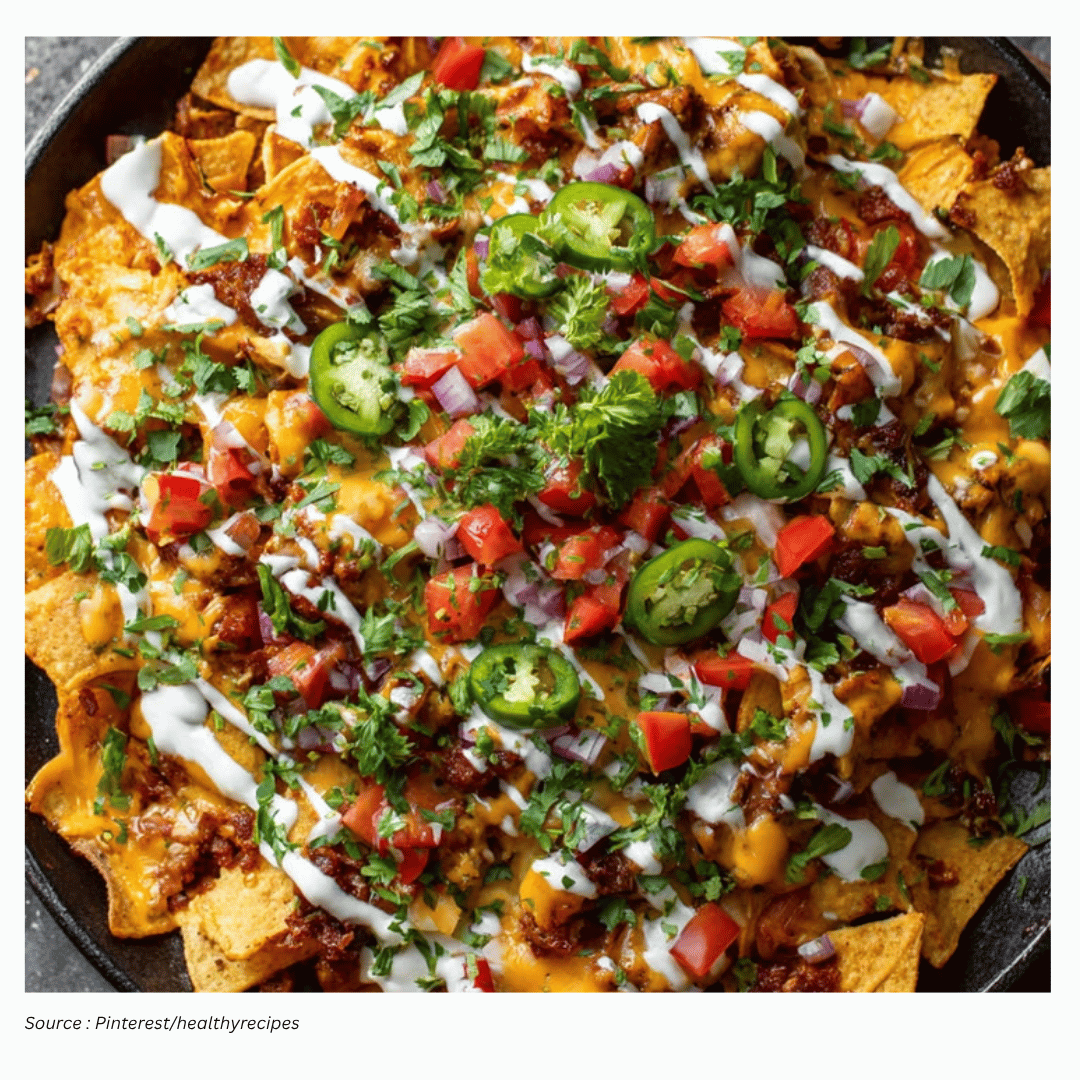
A party-friendly nacho tray built around carne asada
Nachos have a way of fitting into almost any occasion. They can be an appetizer that disappears quickly at a gathering, or they can be built up enough to serve as a full meal. The basic appeal is simple: crisp tortilla chips, gooey melted cheese, and a mix of toppings that can be adjusted to whatever you like or have on hand.
This version leans into a Mexican-inspired approach by using carne asada-style beef as the centerpiece. Instead of defaulting to chicken, the nachos are topped with diced steak that’s been tossed in a marinade of spices and juices, cooked quickly over high heat, then layered with chips and cheese before baking. The result is a tray of nachos that feels hearty and satisfying, while still keeping the method straightforward.
What “carne asada” means in this context
Carne asada literally means beef that has been marinated and grilled. In practice for these nachos, the key idea is the same: take beef, coat it in a flavorful marinade, then cook it over high heat so it browns while staying tender. The steak is diced into small cubes, cooked in a skillet until browned, and the marinade reduces as it cooks—so the meat ends up seasoned and concentrated in flavor.
That combination—marinated beef plus high-heat cooking—is what gives the nachos their character. Once the steak is ready, the rest of the dish is about assembly: layering chips, steak, cheese, and tomatoes, then baking until the cheese melts.
Choosing the right cut: flank steak (and a substitute)
The recipe is built around flank steak, a cut that comes from the cow’s belly muscles. Flank steak is known for being flavorful, but it’s also very lean and contains almost no fat. That leanness is a double-edged sword: it tastes great, but it can turn tough if it isn’t handled properly.
Two techniques matter most here:
- Marinating: tossing the steak in spices and juices helps tenderize it and adds flavor.
- High-heat cooking: cooking quickly over medium-high heat helps brown the meat without overcooking it.
There’s also a crucial slicing step. To keep flank steak tender, it’s important to cut against the grain. That means looking at the direction the muscle fibers run and slicing across them rather than parallel to them. In this recipe, the steak is cut into small cubes, but the same principle applies: orient your cuts so you’re working against the grain.
If you don’t have flank steak, skirt steak can be substituted. Skirt steak has more fat than flank steak, which can lead to richer-flavored meat. It’s also commonly used for grilling, tacos, fajitas, and stir-fries. Like flank steak, it still needs to be sliced against the grain to stay tender.
Why dicing the steak is the main hands-on work
For a dish that looks generous and layered, the process is surprisingly simple. The most time-consuming part is dicing the steak. Once that’s done, the steps move quickly: toss the meat with the marinade, cook it in a skillet, then assemble and bake.
The steak is cut into roughly 1/2-inch cubes using a sharp knife. Cutting against the grain is emphasized because it directly affects tenderness, especially with lean cuts like flank steak. After the steak is diced, it goes into a large bowl where it’s tossed with the marinade ingredients.
From there, you have a choice: you can cook it right away, or you can let it sit in the refrigerator for about an hour. The dish works either way, but a short marinating time is often preferred because it helps tenderize the meat.
Marinate now or later: what to expect
One of the more flexible parts of this approach is that marinating is optional in terms of timing. You can toss the diced steak with the spices and juices and use it immediately. That makes the recipe workable even when you’re short on time.
However, letting the steak marinate for about an hour in the fridge is a common preference. The extra time gives the flavors a chance to settle in and can help with tenderness—especially useful when working with a lean cut.
Either way, the cooking method stays the same: a hot skillet, a quick cook, and enough time for the meat to brown and the marinade to reduce.
Cooking the beef: fast browning and reduced marinade
To cook the steak, heat olive oil in a large skillet over medium-high heat. Add the marinated steak and cook until it has browned and the marinade has reduced. The cooking time is typically about 5 to 6 minutes.
This step does two things at once. First, it cooks and browns the beef quickly, which is important for keeping it tender. Second, it concentrates the marinade as it reduces, leaving the steak coated in a more intense layer of seasoning rather than a watery sauce.
Once the steak is browned, it’s ready to be layered onto chips.
The layering method: how to build nachos that don’t feel bare
Layering is what separates a good tray of nachos from one where only the top chips get the toppings. The method here is a two-layer build on a baking sheet.
- Spread half of the tortilla chips in an even layer on a baking sheet.
- Add half of the cooked steak.
- Add cheese and tomatoes.
- Add a second layer of chips and repeat with the remaining steak, cheese, and tomatoes.
This approach helps distribute the steak and cheese through the tray, so you’re more likely to get a balanced bite even after the top layer is gone. It also makes the tray feel more substantial, which is helpful if you plan to serve the nachos as a main course rather than a snack.
Baking: hot oven, quick finish
Once assembled, the nachos are baked at 425°F for 10 to 15 minutes, or until the cheese is melted. The goal is a fully melted, gooey layer of cheese that binds the chips and steak together, without leaving the chips in the oven so long that they lose their crunch.
Because the steak is already cooked, baking is primarily about melting the cheese and warming everything through. When the cheese looks melted and the tray is hot, it’s ready to come out.
Toppings: finish to taste
After baking, the nachos are topped with your favorite toppings. This is where the dish becomes personal: some people like a simple finish, while others treat nachos like a canvas and pile on multiple textures and flavors.
The base build already includes steak, cheese, and tomatoes, but the final toppings are intentionally open-ended. Add what you like, and add it after baking so fresh toppings keep their texture and don’t wilt in the oven.
Equipment options: baking sheet or cast iron skillet
A standard baking sheet works well for building a wide, shareable tray. But if you prefer a different presentation—or want something that goes from stovetop to oven—this recipe can also be made in a large cast iron skillet.
The method doesn’t change: you still build it in layers as described, then bake until the cheese melts. The skillet option can be especially convenient if you’re already cooking the steak on the stovetop and want to keep the workflow streamlined.
A quicker alternative: microwave nachos
If you want something really quick, there’s also a microwave method. It won’t replicate the same baked tray experience, but it can deliver melty, bubbly cheese fast—useful for a single serving or a speedy snack.
To make carne asada nachos in the microwave:
- Use a dinner-size plate.
- Spread one layer of tortilla chips.
- Top with steak, cheese, and toppings.
- Microwave on high for 30 seconds to 1 minute, or until the cheese becomes bubbly.
This method emphasizes speed and convenience. If you’re making a party tray, the oven-baked version is better suited to serving multiple people at once, but the microwave approach is a practical option when time is tight.
Why this works for both appetizers and main courses
The strength of these carne asada nachos is that they can be scaled by how you serve them. As an appetizer, the tray can be set out for people to share, with toppings added to match the crowd’s preferences. As a main course, the double-layer build and the addition of steak make the dish filling enough to stand on its own.
Because the core elements are straightforward—chips, cooked marinated beef, melted cheese, and toppings—you can also adjust the portions without changing the overall process. The recipe’s structure stays consistent: cook the steak, layer, bake, then top.
Key technique reminders for tender, flavorful steak
- Cut against the grain: This is especially important for flank steak and skirt steak to avoid toughness.
- Use high heat: Medium-high heat helps brown the meat quickly while keeping it tender.
- Don’t overthink marinating time: You can cook immediately, but an hour in the fridge can help tenderize and deepen flavor.
- Layer twice: Building two layers helps distribute steak and cheese so the bottom chips aren’t left plain.
- Bake just until melted: The steak is already cooked; the oven is for melting cheese and warming everything through.
Simple, flexible, and built for sharing
Carne asada nachos bring together a few crowd-pleasing elements—crispy chips, melty cheese, and tender beef—into a dish that’s easy to assemble and easy to customize. The main effort is in prepping the steak, but once it’s diced and cooked, the rest is a quick layering job followed by a short bake at high heat.
Whether you make them on a baking sheet for a party, in a cast iron skillet for a more rustic presentation, or even in the microwave when you need something fast, the core idea remains the same: marinated beef, melted cheese, and toppings you actually want to eat.