
Fried Shrimp Po’ Boy: A Classic New Orleans-Style Sandwich With Cajun Crunch and Remoulade
A sandwich with a sense of place
Sandwiches have a way of telling stories. Across the world, nearly every region has a signature version—something handheld that captures local flavor, local habits, and local cravings. In Louisiana, and especially in New Orleans, one sandwich stands out as a culinary shorthand for the city’s food culture: the po’ boy.
This fried shrimp po’ boy recipe is designed as a tribute to the textures and bold seasoning often associated with New Orleans cooking. Recipe developer Patterson Watkins describes po’ boys as one of her favorite sandwiches, and New Orleans as one of her favorite places. Inspired by a recent trip and a broader love for the city’s food scene, she built a version that leans into what she calls the hallmarks of the local cuisine: salty, twangy, spicy, savory flavors paired with a “plethora of tasty textures.”
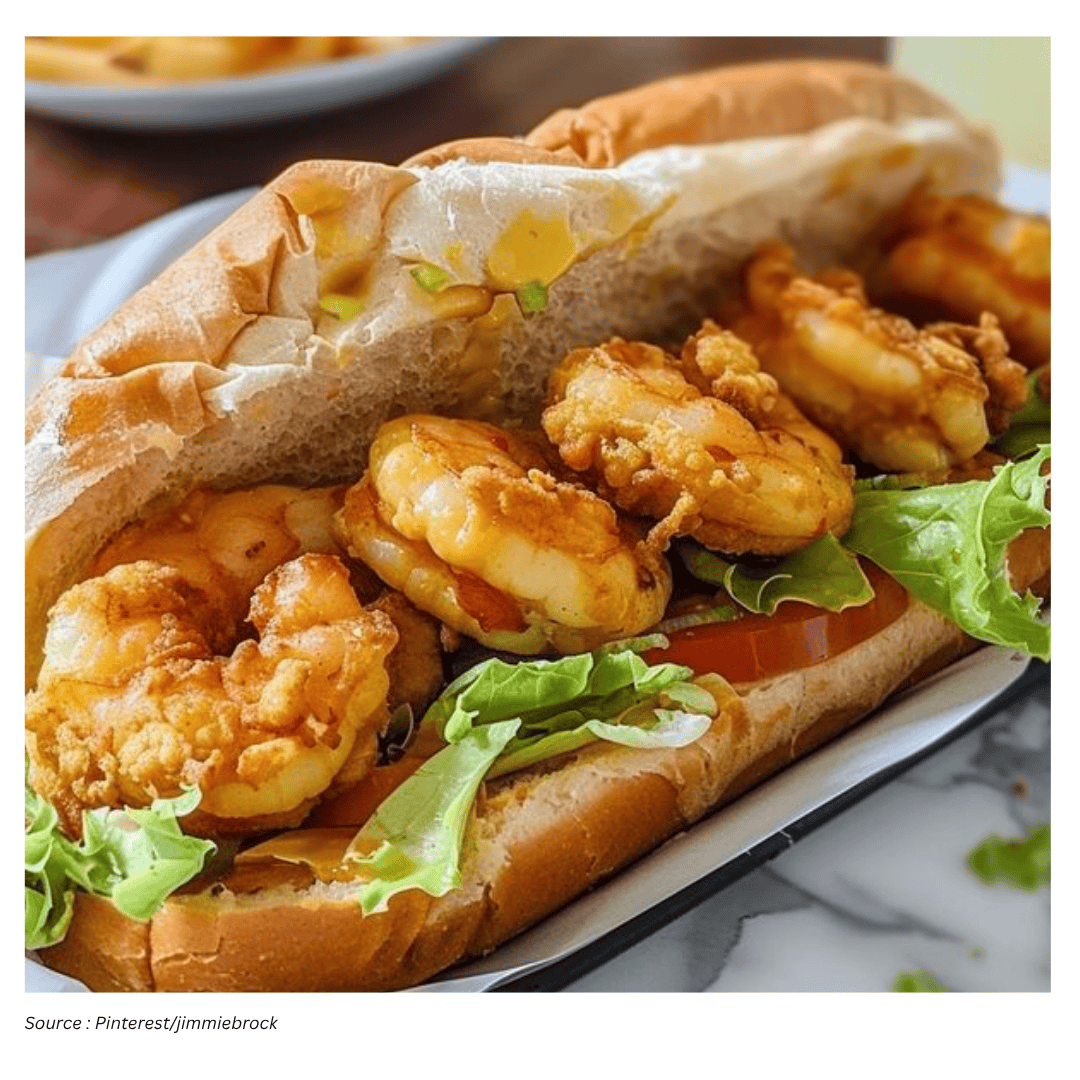
Those textures are central here. You get the pillowy bite of a butter-toasted French loaf, the crispness of shredded iceberg lettuce, the juiciness of tomato slices, the crunchy snap of pickle chips, and—most importantly—the crackly coating on fried, Cajun-spiced shrimp. A creamy, tangy remoulade ties everything together, acting as both seasoning and contrast.
What makes this po’ boy tick: flavor and texture in layers
Watkins’ approach is structured around three main elements: a homemade Cajun seasoning blend, a crisp shrimp coating, and a remoulade sauce that brings richness and sharpness. Each part has a clear job to do.
- Cajun seasoning blend: A mix of paprika, salt, garlic powder, onion powder, black pepper, and cayenne pepper. It seasons the shrimp and also flavors the breading and the remoulade.
- Fried shrimp: Large raw shrimp are seasoned, dipped in a buttermilk-egg-hot sauce mixture, then coated in a flour-cornmeal blend for a crunchy exterior.
- Remoulade: A creamy sauce made with mayonnaise, Dijon mustard, grainy mustard, prepared horseradish, minced capers, Worcestershire sauce, honey, and a portion of the Cajun seasoning.
- Classic toppings: Shredded iceberg lettuce, sliced tomato, and pickles add freshness, acidity, and crunch.
- French bread + butter: Softened butter is spread on the bread before toasting, creating a rich, sturdy base that stands up to the filling.
Put together, these components aim to deliver the “salty, twangy, and spicy” notes in multiple places—shrimp, coating, and sauce—while keeping the sandwich lively through contrast: creamy against crisp, rich against acidic, warm against cool.
Ingredients you’ll need
This recipe is built from a short list of pantry-friendly spices and a few classic sandwich staples. The ingredient list is also organized in a way that makes prep logical: seasoning first, shrimp and breading second, sauce third, then assembly.
- For the Cajun seasoning blend: paprika, salt, garlic powder, onion powder, black pepper, cayenne pepper
- For the shrimp and breading: large raw shrimp (peeled), flour, cornmeal, buttermilk, egg, Louisiana-style hot sauce, vegetable oil (for frying)
- For the remoulade: mayonnaise, Dijon mustard, grainy mustard, prepared horseradish, minced capers, Worcestershire sauce, honey, Cajun seasoning blend (reserved portion)
- For assembling the po’ boys: French bread, softened butter, shredded iceberg lettuce, sliced tomato, pickles
One practical detail in this method is that the Cajun seasoning blend is used in multiple steps. You’ll make it once, then portion it: some for the shrimp, some for the breading, and a measured amount for the remoulade.
Step-by-step: how the fried shrimp po’ boy comes together
The process is straightforward, but it’s intentionally paced. There are two brief refrigeration rests—one after seasoning the shrimp and one after breading them. Those pauses help the seasoning settle and the coating adhere before frying.
1) Make the Cajun seasoning blend. Combine paprika, salt, garlic powder, onion powder, black pepper, and cayenne pepper in a small bowl.
2) Reserve seasoning for the sauce, then split the rest. Remove 1 ½ teaspoons from the bowl and set it aside (this reserved portion will go into the remoulade). Divide the remaining seasoning in half.
3) Season and chill the shrimp. Place the shrimp in a large bowl and sprinkle with one of the halved portions of seasoning. Toss to coat, cover, and refrigerate for 15 minutes.
4) Build the dry coating. In a medium bowl, combine flour and cornmeal. Sprinkle in the other half of the seasoning mix and stir to combine.
5) Mix the wet dip. In a separate medium bowl, whisk together buttermilk, egg, and Louisiana-style hot sauce.
6) Bread the shrimp. Remove shrimp from the refrigerator and drain off any excess liquid (do not rinse). Dip shrimp into the buttermilk mixture, letting excess drip off. Coat shrimp in the dry mixture, pressing with your hands so the breading adheres.
7) Rest the breaded shrimp. Place coated shrimp on a wire rack-lined baking sheet and refrigerate for 15 minutes, uncovered.
8) Make the remoulade. In a medium bowl, whisk together mayonnaise, Dijon mustard, grainy mustard, prepared horseradish, minced capers, Worcestershire sauce, honey, and the reserved 1 ½ teaspoons of Cajun seasoning. Refrigerate until ready to use.
9) Fry the shrimp. Fill a large pot or Dutch oven ¼-full with vegetable oil and bring to 350 F over high heat. Fry shrimp in batches for 3 to 4 minutes, or until golden brown and cooked through. Remove with a slotted spoon and drain on a clean wire rack or a paper towel-lined plate.
10) Assemble the sandwiches. Spread softened butter over portioned French bread and toast. Spread remoulade over the toasted rolls. Divide shredded lettuce, sliced tomatoes, and pickle chips between the dressed rolls. Generously top with fried shrimp, close the sandwiches, and secure with toothpicks before serving.
The end result is a classic shrimp po’ boy profile: crisp fried seafood, creamy remoulade, and bright toppings, all anchored by soft bread that’s been enriched with butter and toasted for structure.
Why remoulade belongs here—and what to do with leftovers
Remoulade is more than a condiment in this sandwich; it’s part of the identity of the dish. It complements seafood especially well, and it’s a staple sauce associated with New Orleans cooking. In this recipe, it also acts as a flavor bridge, reinforcing the Cajun seasoning with creamy, tangy depth.
Watkins notes that making remoulade from scratch is ideal, but it can also mean you’ll have extra. That’s intentional. Some people like a po’ boy heavily sauced, while others prefer a lighter spread, so the recipe provides room to adjust without running short.
Leftover remoulade is presented as a benefit rather than a burden. It can be repurposed in several ways:
- Use it as a dip: Pair it with crudités or potato chips.
- Upgrade everyday sandwiches: Spread it on bread to add a Cajun-spiked twist.
- Stir it into tuna salad: A simple way to add tang and seasoning.
- Pair it with classic sides: Fries and onion rings are natural candidates for dunking.
For storage, keep the remoulade covered in the refrigerator. Watkins says it will last for up to a week.
Po’ boy variations: swapping proteins while keeping the spirit
Fried shrimp may be one of the best-known po’ boy fillings, but it’s only one option in a broader tradition. Watkins describes walking into a po’ boy shop in New Orleans and seeing a “cascade of protein offerings.” The format is flexible: a dressed loaf, a flavorful filling, and toppings that add crunch and brightness.
If you want to keep the po’ boy concept but change the centerpiece, she lists several alternatives that fit comfortably into the same template:
- Grilled shrimp
- Fried catfish or whitefish
- Fried oysters
- Grilled sausage
- Hot roast beef
- Cold-cut classics like turkey and ham
The same lettuce-tomato-pickle trio and the same remoulade approach can work across these options, keeping the sandwich recognizable even as the protein changes.
Vegetarian-friendly ideas are also part of the po’ boy landscape at home. Watkins suggests fried green tomatoes or grilled mushrooms as satisfying alternatives that still deliver the kind of hearty bite and texture contrast that makes a po’ boy feel complete.
Toppings and add-ons: classic, plus a few extra ideas
This recipe sticks to standard po’ boy toppings—lettuce, tomato, and pickles—because they do a lot of work: they lighten the sandwich, add crunch, and provide acidity to balance fried shrimp and creamy sauce. But the format is adaptable, and Watkins points to a few additions that can shift the sandwich without changing its character.
- Thinly sliced onion: Adds sharpness and extra crunch.
- Spicy pickled peppers: Lean into heat and tang.
- Potato chips: An unexpected topping that adds “crunchy goodness.”
These options are best thought of as texture tools. The po’ boy is already layered, so small changes—more crunch here, more heat there—can make the experience feel new while staying grounded in the same core combination.
Serving notes: building a po’ boy that eats well
Because this sandwich is stacked with crispy shrimp and multiple toppings, assembly order matters. Spreading remoulade on the toasted bread first helps anchor the fillings, while lettuce and tomato create a fresh layer between sauce and shrimp. Pickles contribute acidity and crunch, and placing the fried shrimp on top preserves their crisp coating as long as possible before serving.
Securing the finished sandwiches with toothpicks is a simple final step that makes them easier to handle—especially helpful when the filling is generous, as this one is meant to be.
A classic shrimp po’ boy you can make at home
At its heart, this fried shrimp po’ boy is about contrast: spicy seasoning against cool vegetables, crunchy coating against soft bread, creamy remoulade against crisp pickles. It’s also about flexibility. You can adjust the sauce level to taste, use leftover remoulade beyond the sandwich, and even swap the protein while keeping the familiar po’ boy structure.
For anyone craving a New Orleans-style sandwich experience at home, this version delivers the recognizable elements—Cajun-spiced fried shrimp, remoulade, lettuce, tomato, and pickles—piled into a butter-toasted French loaf. It’s the kind of meal that aims to “transport you right to New Orleans,” at least until the next trip.