
Creamy Tuscan Chicken: A Weeknight Dinner That Feels Like a Treat
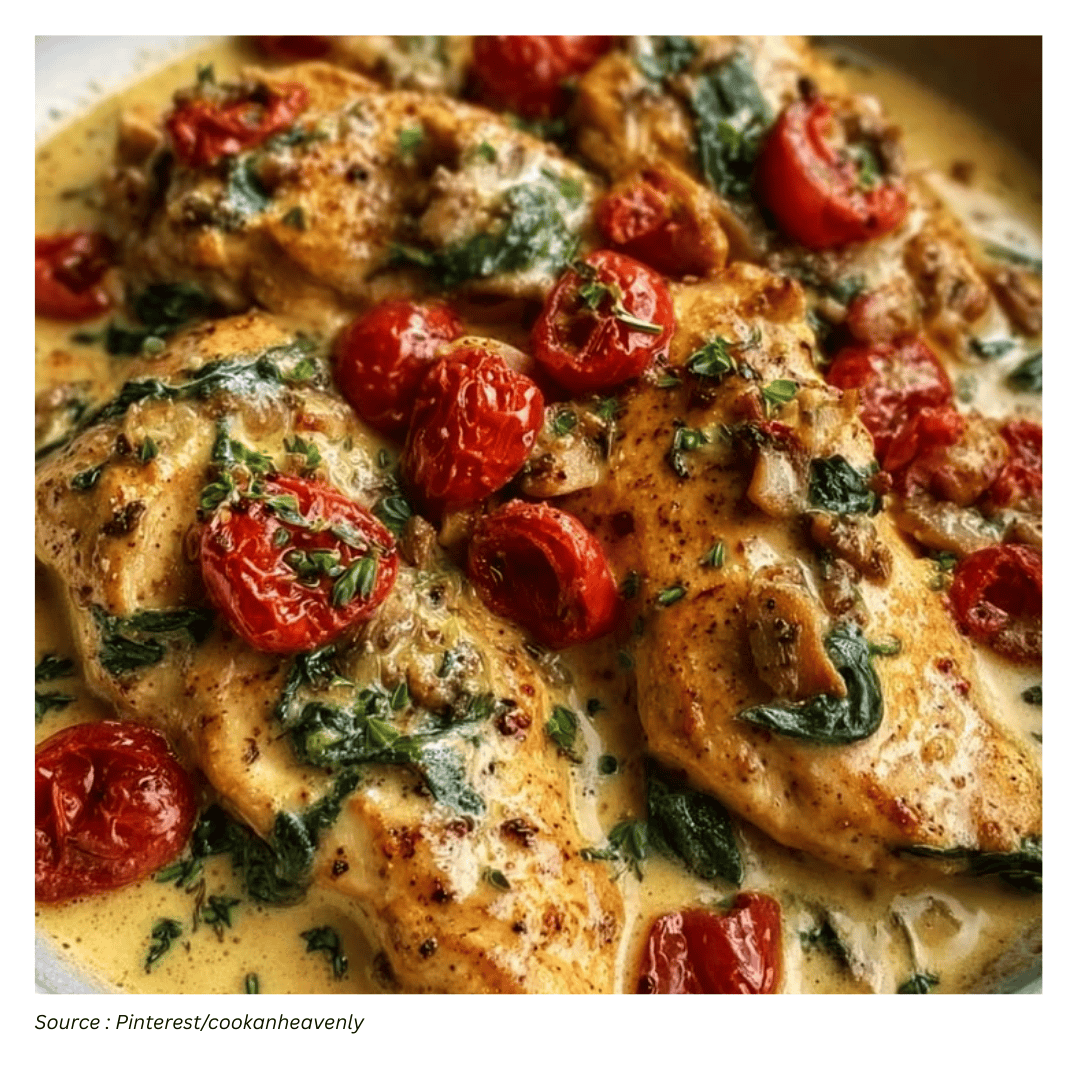
A creamy chicken dinner that earns repeat status
Some recipes become staples because they’re reliable, quick, and broadly appealing. Creamy Tuscan chicken fits that description—and then some. It’s the kind of skillet dinner that can make an ordinary weeknight feel a little more intentional, without requiring hours of prep or a long list of complicated techniques.
The appeal is straightforward: pan-seared chicken breasts are returned to a simple but flavorful sauce built in the same skillet. Butter, garlic, cherry tomatoes, spinach, heavy cream, and Parmesan come together into a creamy mixture that clings to the chicken and begs for something on the side to soak it up. The overall effect is comforting and restaurant-like, yet still very much in the realm of “doable after work.”
It’s also the type of dish people tend to make again and again. Home cooks often praise how approachable it is and how well it lands with family members who can be hard to please. Others highlight the sauce as the standout element—rich, savory, and balanced by the brightness of tomatoes and the freshness of spinach.
What people notice most: ease, flavor, and a crowd-pleasing sauce
One reason this dish stays popular is that it checks multiple boxes at once: it’s quick, it feels special, and it doesn’t demand much beyond attention to the skillet. Comments from home cooks frequently focus on how smoothly it fits into a busy routine while still delivering a memorable dinner.
Family-friendly results: Some cooks describe making it for a skeptical household and being surprised at how universally it was enjoyed—even by picky eaters.
Big flavor with minimal effort: Others mention how easy the recipe feels, especially considering how flavorful the sauce turns out.
Room for personal touches: While the core method stays the same, some people like pairing it with pasta or noodles, or doing small prep steps like brining the chicken before cooking.
Across these reactions, a consistent theme emerges: the sauce is the star. The chicken is important, but the creamy Tuscan-style pan sauce is what makes the meal feel elevated.
The key idea: build everything in one skillet
This recipe is essentially a lesson in smart skillet cooking. You start by searing the chicken in olive oil, then use the same pan to build layers of flavor—scraping up any browned bits and seasonings as you go. That means the sauce isn’t just creamy; it’s infused with what developed during the chicken’s sear.
Another practical benefit is that the process stays contained. You’re not juggling multiple pots or a complex sequence of steps. Instead, you move from chicken to aromatics to vegetables to cream and cheese, then return the chicken to finish in the sauce.
Step-by-step overview: how the dish comes together
While the full ingredient list and formal instructions are typically listed separately, the cooking method itself is clear and repeatable. Here’s the flow of the recipe, from first heat to final plating.
Heat the olive oil: Warm olive oil in a skillet over medium heat until it looks slick and begins to glide across the pan.
Sear the chicken and season in the skillet: Add chicken breasts, spacing them so all four fit comfortably. Season with salt, pepper, and oregano. Seasoning directly in the skillet can help any excess seasoning mix back into the pan and ultimately into the sauce.
Cook until golden and done: Cook the chicken for about 8 minutes per side. A golden crust on both sides is a helpful indicator that the chicken is cooked through and no longer pink. Remove from the skillet and set aside, covered.
Add butter and scrape the pan: In the same skillet, add butter and stir as it melts, scraping up any stuck-on chicken and seasoning bits so they blend into the base of the sauce.
Cook the garlic briefly: Stir in garlic and cook until fragrant, about 1 minute.
Soften the tomatoes: Add cherry tomatoes and season with salt and pepper. Cook until the skins begin to burst.
Wilt the spinach: Add spinach and cook until it begins to wilt.
Make it creamy: Stir in heavy cream and Parmesan, mixing until combined and the sauce reaches a simmer.
Simmer and thicken: Reduce the heat to low and let the sauce simmer until slightly reduced and thickened, about 3 minutes.
Return chicken to the sauce: Place the cooked chicken back into the skillet and let it warm through in the sauce, about 5 to 7 minutes.
Serve with lemon wedges: Plate the chicken with sauce and serve with lemon wedges on the side.
The whole process is designed to be finished in under an hour, which is a big part of why it’s so well-suited to weeknights. Yet the final dish doesn’t read as rushed: the sauce tastes developed, the chicken is coated and glossy, and the skillet presentation feels abundant.
Why seasoning in the pan can work well here
Many cooks season chicken on a cutting board before it ever touches heat. This recipe highlights a slightly different approach: seasoning once the chicken is in the skillet. The logic is simple—any seasoning that doesn’t immediately cling to the chicken doesn’t have to be wasted. Instead, it remains in the pan, where it can be stirred into the sauce later.
That approach also ties into the broader strength of the dish: everything is connected. The chicken flavors the pan; the pan flavors the sauce; the sauce finishes the chicken. When you scrape the browned bits into the butter, then add garlic, tomatoes, spinach, cream, and Parmesan, you’re effectively turning the skillet’s history into the meal’s backbone.
The sauce is the real centerpiece
It’s easy to think of this as a “chicken breast recipe,” but the creamy Tuscan-style sauce is what makes it feel special. It’s described as simple but flavorful and creamy, and it’s versatile enough that it has been used across many recipes. Here, it’s built from a handful of familiar ingredients, each playing a specific role:
Butter and garlic: Create a savory, aromatic base once the chicken is removed.
Cherry tomatoes: Add bursts of sweetness and acidity as their skins begin to split.
Spinach: Wilts into the sauce, bringing color and a mild vegetal note.
Heavy cream and Parmesan: Provide the creamy body and salty, cheesy depth that define the dish.
After simmering briefly, the sauce thickens just enough to coat the chicken and whatever you serve alongside it. That’s why many people treat the sides as a crucial part of the experience—not because the chicken needs help, but because the sauce is too good to leave behind.
Serving ideas: choose something that soaks up the sauce
This dish is often described as ideal with bread, and it’s easy to see why. A creamy skillet sauce practically invites dipping. But bread isn’t the only option. The chicken and sauce can also be served over rice or pasta, or paired with creamy mashed potatoes.
The guiding principle is simple: pick a side that can capture every bit of sauce left on the plate. Whether you go with a slice of bread, a bowl of rice, or a tangle of pasta, the goal is the same—don’t let that Tuscan sauce go to waste.
How to store leftovers and plan ahead
For a recipe that feels special, it also fits neatly into practical meal planning. Leftovers can be stored in an airtight container in the refrigerator for up to 4 days. That makes it a good candidate for cooking once and enjoying multiple times—whether as a next-day lunch or a quick reheat dinner.
If you like to prep ahead, the Tuscan sauce can also be batched in advance and frozen for up to 3 months before use. That can turn a future dinner into an even faster process: sear chicken, warm the sauce, and finish everything together in the skillet.
A weeknight recipe that can also do date-night duty
Creamy Tuscan chicken sits in a sweet spot: it’s easy enough for a weeknight, but polished enough to serve when you want dinner to feel a bit more elevated. The skillet method keeps the process manageable, while the final result—golden chicken nestled in a creamy, tomato-studded sauce—looks and tastes like you put in far more effort than you actually did.
If you’re building a rotation of dependable dinners, this one earns its place not just because it’s quick, but because it delivers a satisfying “special occasion” feeling on an ordinary day. And if you’re serving it to others, it’s the kind of dish that tends to spark immediate reactions—often focused on the sauce—and then requests to make it again.