
Fast-Food Breakfast Sandwiches, Ranked: What Works, What Doesn’t, and Why
Fast-food menus tend to advertise their strengths clearly. Some chains are known for burgers, others for chicken, and others for coffee and baked goods. Breakfast, however, is harder to judge at a glance. Many restaurants are working with the same compact set of building blocks: eggs, cheese, hash browns, and some form of pork. With so many overlapping ingredients and formats, the differences come down to details—how the bread is toasted, how assertive a sauce is, whether the egg tastes fresh or reheated, and whether the protein adds comfort or chaos.
This ranking looks at a wide range of fast-food breakfast sandwiches and sandwich-adjacent items, emphasizing two ideas: execution and innovation. Execution covers texture and flavor—whether each component tastes like it belongs and whether the bite holds together. Innovation is about whether a chain uses the breakfast format to do something beyond the obvious, either by leaning into its brand identity or by offering an unexpected combination that still makes sense. Preference is given to items that represent a restaurant’s breakfast identity or those marketed as “ultimate” or “fully loaded,” since they’re meant to showcase the menu at its boldest.
Below, the list runs from worst to best, with notes on what held each item back—or what made it rise above a crowded field of eggs and cheese.
12) Del Taco: Bacon Breakfast Burrito
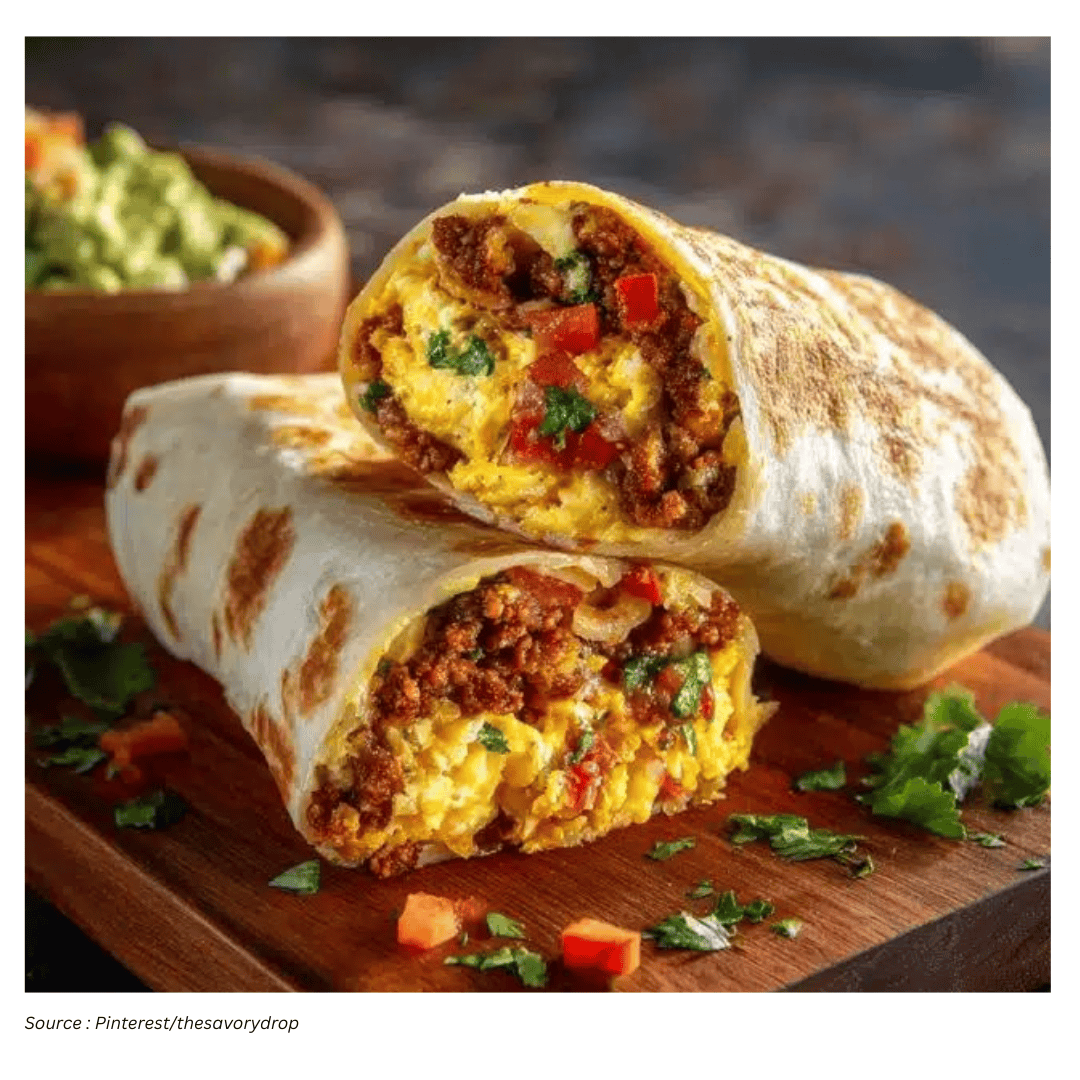
Breakfast burritos can be reliably satisfying, which makes it notable when one feels actively discordant. Del Taco’s bacon breakfast burrito struggles because too many strong elements compete instead of complementing one another. The chain’s default red sauce is the first issue: its Tabasco-adjacent profile sounds like it should pair well with eggs and cheese, but here it reads as overly aggressive, dominating the overall flavor.
The bacon adds a second competing force, seasoned heavily with smoke flavor. When the sauce and bacon collide, the palate is pulled in two directions at once, and neither side wins. Texture becomes another drawback, as the burrito can skew overly greasy, which throws off the interior and makes the whole experience feel muddled rather than cohesive.
11) Subway: Steak, Egg, and Cheese on Flatbread (with add-ons)
Subway’s breakfast concept has a certain logic: fold flatbread around steak, eggs, and cheese, and you’re not far from the idea of a steak-and-cheese omelet. Customization can also be appealing, and additions like spinach and tomatoes can sound like a smart way to brighten a heavy breakfast base. In practice, the sandwich is undermined by the component that’s supposed to provide the backbone: the steak.
The meat can come across as overcooked and rubbery, and because protein does so much of the “heavy lifting” in a breakfast sandwich, that texture problem drags down everything else. The eggs are pre-cooked slabs that don’t contribute much flavor. The American cheese does melt well and delivers the familiar profile you’d expect, but even that can’t fully compensate. A final misstep is the creamy Sriracha, which can overwhelm rather than accent, pushing the sandwich into a one-note heat that doesn’t leave room for nuance.
10) Dunkin’: Wake-Up Wrap
Dunkin’s Wake-Up Wrap aims for light and portable, and in that narrow sense it does its job. But compared with heartier breakfast offerings, it can feel like it’s missing the substance that makes a breakfast sandwich memorable. The format is small—closer to a street taco-sized tortilla folded around egg, bacon, and American cheese—so it’s inherently limited in impact.
There are flashes of interest from hot honey, and protein customization adds flexibility, but the wrap can still read as underwhelming. The tortilla itself is a major issue, described as unusually tough and unyielding, which makes the bite feel more like work than comfort. The ingredients inside aren’t necessarily bad; they just don’t stand out. When the hot honey appears, it briefly lifts the experience, but those moments are intermittent rather than integrated.
9) Sonic: Sausage Breakfast Toaster
The breakfast toaster is a promising idea: a breakfast-forward grilled cheese built on thick, Texas toast-style white bread. The expectation is a crisp exterior with a satisfying crunch that gives way to a softer interior and warm fillings. Instead, the bread can land in an awkward middle ground—looking toasted but eating spongy, with little flavor of its own.
If that softness came from a rich butteriness, it might feel intentional. The problem is the lack of buttery flavor to justify the texture, making it seem like a preparation issue rather than a deliberate choice. Inside, the egg and cheese work well together until the sausage arrives with an artificial smokiness and excessive salt. Salt is part of the fast-food bargain, but here it becomes a blunt instrument that overwhelms the sandwich’s more delicate elements.
8) Starbucks: Double-Smoked Bacon, Cheddar, and Egg Sandwich
As a coffee shop that also sells breakfast food, Starbucks enters this comparison with a different set of expectations. The double-smoked bacon, cheddar, and egg sandwich is pre-packaged and shipped before being heated and served, and that reality sets a ceiling on how fresh it can taste. Still, it performs better than some might assume, especially as a companion to a coffee order.
The sandwich uses a croissant flattened into a round shape to match the egg. The bacon is thin but not brittle and tastes sufficiently like bacon. The cheddar is the key: it ties the components together and stands out as a strength, offering a more defined cheese character than the typical fast-food default. It doesn’t compete with the top-tier items on this list, but it avoids major flaws and can be a reasonable choice when convenience is the priority.
7) Wendy’s: Sausage, Egg, and Cheese Croissant
Wendy’s often gets credit for its soft, fluffy breakfast breads, whether on biscuits, English muffins, or croissants. The croissant version is substantial—tall and hefty, with a buttery square of pastry that looks like it should deliver comfort. Yet the overall flavor can feel strangely muted, as if the sandwich has size without personality.
Texture is not the issue here; everything is soft and yielding. The problem is that bite after bite can feel oddly devoid of distinct “breakfast flavor,” despite the familiar ingredients. In that sense, it becomes a snapshot of Wendy’s broader breakfast challenge: a lot of the fundamentals are in place, especially the emphasis on a good bun, but the final product can come across as a second-rate version of a sandwich you’ve had elsewhere.
6) Taco Bell: Breakfast Crunchwrap
Taco Bell’s Breakfast Crunchwrap is one of the most visually and structurally distinctive items in the field. It hybridizes sandwich and burrito logic, using a crisped tortilla to hold eggs, cheese, sausage, and a hash brown patty in a tidy, engineered package. The pressed exterior and pinwheel shape aren’t just aesthetic—they keep the fillings contained and make the item feel thoughtfully designed.
The hash brown patty brings a hearty crunch, and the sausage offers a red pepper kick without tipping into excessive salt. The egg, however, can be relatively bland on its own, which makes sauce choice especially important. Here, the spicy, chili powder-infused mayo-style sauce (also used on other menu items) can become overbearing, drowning out milder flavors rather than balancing them. The concept is strong and the structure is impressive, but the flavor harmony depends heavily on restraint that this version doesn’t always show.
5) Burger King: Sausage, Egg, and Cheese Biscuit
It’s easy to associate Burger King breakfast with croissants, but the chain’s biscuit sandwich shows it can deliver a more traditional format competently. The sausage patty is a highlight: well-seasoned and supported by generous melted cheese. The egg is fluffy with a pleasant flavor, though it can get overshadowed by the heavier elements above and below it.
The biscuit is where the sandwich loses points. Some biscuit-based breakfast sandwiches lean hard into buttery richness, but that intensity feels muted here. The exterior can be nicely crisp with a hint of butter, while the interior may feel underdone and overly floury. On a better day, the biscuit could elevate the whole sandwich; as served, it holds the item back from the top tier.
4) Wendy’s: Sausage, Egg, and Cheese English Muffin
Wendy’s English muffin sandwich shows the chain can execute the basics with clarity. The sausage tastes good without leaning on artificial smokiness, the cheese melts properly, and the egg is fluffy enough to register as more than filler. The sandwich is pleasant and coherent, which is no small achievement in a category where reheated components can blur together.
The limitation is the English muffin itself. Compared with muffins that strike a strong balance between chew and crunch, Wendy’s version can be denser than ideal, tipping into a stodgier texture. It isn’t unpleasant, but it lacks the toasted crunch that gives the best breakfast sandwiches a more dynamic bite. The result is a solid baseline sandwich that’s edged out by competitors with better bread texture.
3) Burger King: Fully Loaded Croissan’wich
Introduced in 1983, the Croissan’wich helped normalize the idea that a fast-food breakfast sandwich could lean into pastry. The fully loaded version embraces a “more is more” philosophy: ham, bacon, sausage, eggs, and cheese stacked into a rich, indulgent package. It’s not subtle, but it delivers a concentrated wallop of familiar breakfast flavors.
The croissant provides buttery contrast for those who prefer softness over the crisp chew of an English muffin. A drizzle of maple syrup is presented as the simplest way to complete the sweet-and-savory comfort profile. The trade-off of the fully loaded approach is that it can feel like a jack-of-all-trades: it does many things at once, but without a truly unexpected element that would push it even higher. Still, it remains one of the more satisfying fast-food breakfast experiences.
2) Dunkin’: Sausage, Egg, and Cheese Croissant
Dunkin’ arrived later to the breakfast sandwich space, debuting its lineup in 1997, but its croissant sandwich shows how quickly it found its footing. In structure, it resembles Burger King’s croissant-based approach, with a familiar balance of meat, cheese, egg, and bread. The difference is the croissant itself, which stands out as a clear advantage.
Dunkin’s pastry strength shows in the laminated texture and the more pronounced pastry flavor, creating a better contrast with the fillings and a more satisfying bite. The sandwich feels well-proportioned and cohesive, with the croissant lifting the entire experience rather than merely serving as a soft wrapper. It’s a strong example of how one component—bread quality—can separate a good breakfast sandwich from a great one.
1) McDonald’s and the top tier: Classics that define the category
McDonald’s occupies a unique position in fast-food breakfast because its sandwiches don’t just compete in the category—they help define the boundaries of what the category is. The Egg McMuffin remains a classic not because it’s flashy, but because it treats each ingredient with enough care that the whole becomes more than the sum of its parts. The English muffin is central: soft and slightly chewy on the outside, with a toasted interior that adds contrast. Add a fresh egg, grilled ham, and melty American cheese, and the result is a flavor profile that feels distinctly tied to the brand.
For many, the upgrade is swapping ham for sausage. The Sausage McMuffin with egg builds on the same strengths—especially the English muffin and the egg preparation, which benefits from being cracked fresh into a circular mold. The sausage is well-seasoned, the American cheese melts into the stack, and the overall construction feels balanced and intentional. Even on an off day, when the muffin may be toasted more aggressively than usual, the effect can add a buttered-popcorn-like note rather than ruining the sandwich.
Also near the top: Panera, Jack in the Box, Chick-fil-A, and Carl’s Jr.
Several other chains make compelling cases by either nailing structure or doing something genuinely unexpected. Panera’s Asiago sausage and egg sandwich demonstrates how a bagel can succeed when it’s engineered for sandwich duty. The Asiago cheese bagel offers structural integrity and subtle salty-cheesy flavor without becoming so dense that fillings squish out. The sausage, fluffy egg, cheese, and a swipe of garlic aioli come together in a cohesive, balanced bite that stays contained.
Jack in the Box’s ultimate breakfast sandwich leans into a “loaded” identity but makes a key choice by omitting sausage. With bacon and ham as the main proteins, plus two eggs and two slices of cheese on a split-top bun, the sandwich emphasizes soft, savory meltiness with a contrasting bite from bacon that’s thick without being overly crunchy. The result is a high-impact sandwich that feels carefully composed rather than simply piled on.
Chick-fil-A’s chicken, egg, and cheese biscuit stands out because fried chicken is rare on the fast-food breakfast circuit. The sandwich succeeds not only because the chicken is high quality, but because the combination avoids the dryness you might expect from chicken on a biscuit. Instead, it lands as juicy and buttery, with egg and American cheese adding softness and cohesion.
Carl’s Jr.’s breakfast burger ultimately earns the strongest impression by leaning into what the chain does best: burgers. By adding a char-grilled burger patty and a stack of the brand’s Hash Rounds alongside bacon, egg, and cheese, the sandwich creates a buffer that makes ketchup feel not only acceptable but welcome. In a context where ketchup can clash with salty breakfast meats, the burger patty and hash rounds absorb and balance the flavor, making the overall concept feel surprisingly natural—and memorable.
What separates the best from the rest
Ranking breakfast sandwiches is tricky precisely because the components are so familiar. Eggs, cheese, and meat generally get along, so the deciding factors become texture, balance, and assembly. The lower-ranked items tend to suffer from one dominant flaw—an overly aggressive sauce, a rubbery protein, a tough tortilla, or a bread texture that undermines the bite. The higher-ranked items either execute the basics with unusual consistency or use the sandwich format to express something distinctive about the restaurant.
The best fast-food breakfast sandwiches respect the realities of mass production while still delivering contrast: a toasted interior against a soft exterior, a crisp hash brown against fluffy egg, or a rich pastry against savory fillings. When a chain manages to recreate that satisfying “breakfast sandwich” feeling hundreds of times a day, it’s worth noticing. And when it does something unexpected—fried chicken on a biscuit or a burger built for the morning—it can turn a routine order into a genuine craving.
- Most common pitfalls: overpowering sauces, overly salty or artificially smoky proteins, and bread textures that turn spongy or dense.
- Most reliable strengths: well-toasted English muffins, balanced sausage seasoning, and thoughtful structural design that prevents fillings from sliding out.
- Most effective innovation: items that play to a chain’s core identity—like burgers for breakfast or standout pastry craftsmanship.
In the end, the breakfast sandwich field rewards both restraint and creativity. The winners are the ones that either perfect the classic formula or bend it in a way that still feels like breakfast.