
Tomato-Rubbed Bread with Serrano Ham (Pan con Tomate y Jamón de Serrano)
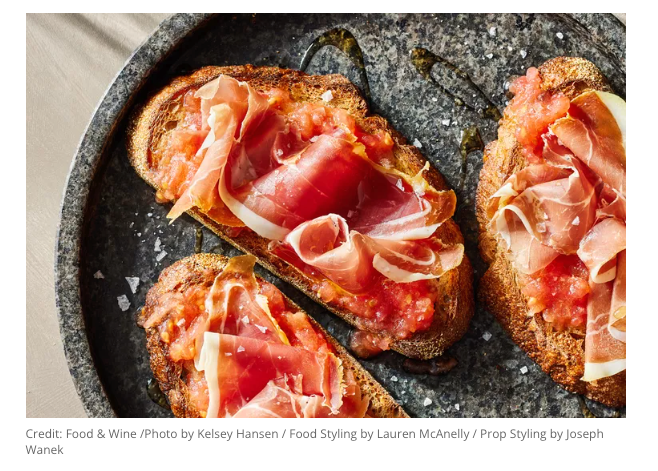
A Catalan classic built on a few great ingredients
There’s something deeply satisfying about the combination of warm bread, ripe tomato, and golden olive oil. Pan con tomate—also known in Catalan as pa amb tomàquet—is a simple dish that leans on that trio, plus salt, to create something that feels both humble and complete. It’s ubiquitous in Catalan cuisine, appearing at the start of many tapas meals and showing up in homes, bars, and restaurants across the region.
Part of its appeal is how naturally it fits into almost any moment of the day. It can be a snack, a light bite, or one element on a larger table. It’s also incredibly quick and easy to make, requiring only a handful of steps and ingredients. And because the base is so straightforward, it’s infinitely customizable—easy to keep traditional or to adapt with toppings that suit the occasion.
Why it works: toast as the perfect canvas
At its core, pan con tomate is about texture and contrast. Rustic bread is toasted until crisp on the outside and warm within. Tomato adds moisture and freshness, olive oil adds richness, and salt sharpens everything into focus. When you top that foundation with serrano ham, you get a savory finish that turns a simple tomato toast into something more substantial while still keeping the preparation minimal.
The dish is often described as a showstopper not because it’s complicated, but because it’s so direct. When the ingredients are good and the bread is properly toasted, the result tastes bigger than the sum of its parts.
A brief note on history and tradition
Pan con tomate has long been associated with Catalonia, and it’s sometimes described as the region’s national dish. The first documentation of pan con tomate dates back to 1884. That year, the tomato harvest was especially abundant, and Catalan farmers began using surplus tomatoes to moisten dry or stale bread by rubbing it with tomato. The practice was practical, resourceful, and delicious—qualities that helped the dish endure and spread.
Today, it remains a familiar starting point for a good tapas meal, and it’s just as likely to be made at home as ordered in a restaurant.
Two methods: traditional rubbing vs. grating for speed
This preparation can be made in two main ways, depending on how many people you’re serving and how you like to work. One method is especially well-suited to smaller groups and follows the more traditional approach: rubbing the cut side of a tomato directly onto toasted bread. In this version, the crunchy toast acts like a grater, catching the tomato flesh while leaving the skin behind.
The second method is designed for bigger parties or faster assembly. Instead of rubbing the tomato on each slice, you grate the tomatoes into a bowl, mix them with olive oil and salt, and then spoon the mixture onto the toast. Both methods lead to the same essential flavor profile—tomato, olive oil, salt, and bread—while offering different advantages in workflow.
Ingredients
- 4 slices rustic sourdough bread, toasted
- Spanish extra-virgin olive oil, for drizzling
- Ripe tomatoes (used for rubbing or grating)
- Salt
- Serrano ham (1 slice per toast)
Method 1: Rub the tomato directly onto the toast (great for smaller servings)
This method is straightforward and tactile, and it highlights the traditional technique: the toast itself becomes the tool that captures tomato pulp. It’s especially satisfying when you’re making a few pieces at a time and want to serve them immediately.
- Toast the rustic sourdough bread.
- Cut the tomatoes in half.
- Rub the cut sides of the tomato onto the toast until the flesh is gone.
- Throw away the skins.
- Drizzle the toast with Spanish extra-virgin olive oil and season with salt.
- Top each toast with a slice of serrano ham.
- Drizzle with a little more olive oil and serve.
Because the tomato is applied directly, the bread’s surface gets coated in a fresh layer of tomato pulp that sinks into the warm toast. The final drizzle of olive oil brings everything together, and the serrano ham adds a savory topping that turns the toast into a complete bite.
Method 2: Grate the tomatoes into a bowl (ideal for bigger parties)
If you’re preparing pan con tomate for more people, grating the tomatoes first can speed up the process and make assembly more consistent. Instead of rubbing each slice individually, you create a tomato mixture that can be spooned onto toast quickly.
- Place a grater over a large mixing bowl.
- Rub the cut sides of the tomatoes over the grater until the flesh is gone.
- Throw away the skins.
- Add 3 tablespoons of olive oil to the tomato in the bowl.
- Season with salt.
- Toast the bread.
- Spoon the tomato mixture onto the toast and top with a slice of ham.
- Drizzle with a little olive oil and serve.
This approach keeps the core flavor intact while making it easier to prepare multiple servings in a short window. Mixing the tomatoes with olive oil and salt in the bowl also ensures the seasoning is evenly distributed before it hits the bread.
Serving ideas and customization
One reason pan con tomate remains so popular is its flexibility. The base is delicious on its own, and it also welcomes toppings that can shift it from snack to meal. This version features serrano ham, but the sky’s the limit when it comes to variations. You can pair tomato bread with other ingredients depending on what you want to serve and when.
- Anchovies
- Cheese
- Ham
- Eggs
- Grilled veggies
- Sausage
These options can be used individually or combined to suit your table. The key is that the tomato-rubbed toast stays the foundation, and everything else builds on the contrast of crisp bread, juicy tomato, and olive oil.
How to choose between the two methods
Both methods are legitimate and rooted in the same idea; the best choice depends on your situation. If you’re making a small plate for yourself or a couple of people, rubbing the tomato directly on the toast is quick and feels true to the dish’s everyday character. If you’re feeding more people, grating tomatoes into a bowl can make preparation smoother and faster while still delivering the same essential taste.
Either way, pan con tomate is meant to be approachable. It’s a dish that doesn’t ask for complicated technique, only a few simple steps and a focus on the basic combination that makes it so memorable: warm toast, ripe tomato, olive oil, and salt—finished here with serrano ham and an extra drizzle of oil right before serving.
Bringing it to the table
In Catalonia, pan con tomate often appears at the start of a meal, and it works beautifully in that role: it’s quick, it’s satisfying, and it sets a welcoming tone. It can also be served as a snack or as part of any meal of the day. Because it’s so easy to assemble, it’s well-suited to casual gatherings where you want something flavorful without spending a lot of time in the kitchen.
Whether you choose the traditional rubbing method or the party-friendly grating method, the result is the same kind of pleasure: crisp toast carrying the bright taste of tomato and the richness of olive oil, with serrano ham adding a savory finish. Simple, adaptable, and deeply satisfying, it’s easy to see why this dish has remained a staple for so long.