
Savory Tomato-Basil Oatmeal With Poached Eggs: A Fast, Comforting Meal
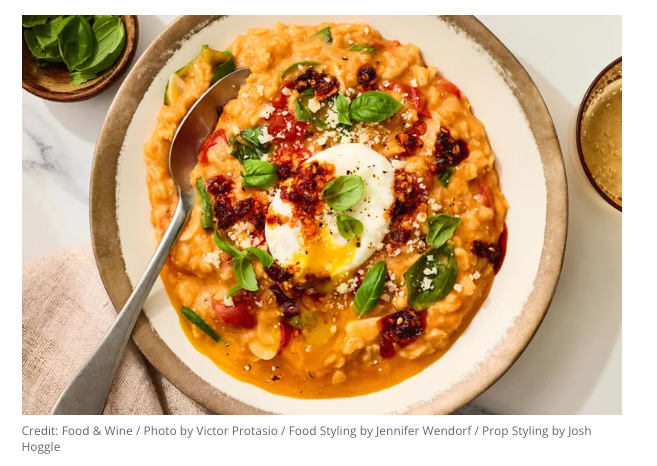
A savory oatmeal that feels like a full meal
Oatmeal is often treated as a sweet breakfast staple, but it can be just as satisfying when cooked in a savory direction. This version is built around comforting, familiar flavors—tomato, basil, and cheese—then topped with a poached egg for richness and structure. The result is a bowl that comes together quickly and eats like a complete meal rather than a side dish.
The approach is simple: sauté aromatics in butter, simmer tomatoes with tomato paste and wine until concentrated, then cook rolled oats directly in chicken stock until creamy. Basil and Parmigiano-Reggiano are stirred in at the end, and the oatmeal is served immediately with a freshly poached egg on top. It’s designed to be warm, savory, and deeply satisfying, with enough body to hold up as brunch or an easy lunch or dinner.
Chef background and the idea behind the dish
This recipe is associated with Sang Yoon, a French-trained Korean-American chef known for his work in Los Angeles restaurants, including the gastropub Father’s Office (recognized for its proprietary Office Burger). He is also the proprietor of the modern Southeast Asian fine-dining restaurant Lukshon and the California-inspired yakitori restaurant Two Birds/One Stone.
The dish itself reflects a practical, modern cooking style: it’s clever without being complicated, and it leans on pantry-friendly ingredients while still delivering a layered, restaurant-like experience. The poached egg is not just a garnish; it’s part of what makes the bowl feel complete, adding a soft, runny center that blends into the oats when broken.
Why rolled oats matter here
The recipe specifically calls for old-fashioned rolled oats, and that choice is central to the final texture. While quick oats and rolled oats can be interchangeable in some recipes, this is one of the cases where the difference is noticeable.
Rolled oats are lightly steamed and flattened, but they remain relatively thick. That thickness helps them keep a firmer chew and a more distinct texture in the finished oatmeal.
Quick oats are more heavily steamed and rolled much thinner. They cook faster, but they can soften more dramatically and change the overall mouthfeel.
For this savory bowl, the goal is a creamy sauce with oats that still have structure. Rolled oats deliver that balance: tender, but not mushy, and able to stand up to the tomato base, cheese, and egg.
Flavor profile: tomato, basil, cheese, and a buttery finish
At its core, this is a tomato-forward savory oatmeal. Tomatoes and tomato paste are cooked with garlic and shallot in butter, then reduced with wine until the mixture becomes concentrated. That reduction step matters because it deepens the flavor before the stock and oats go in. Once the oats are cooked, basil and Parmigiano-Reggiano are stirred in, and a final bit of butter is added for a glossy, cohesive finish.
The toppings are intentionally minimal: a poached egg, a few basil leaves, and more grated cheese passed at the table. The bowl is meant to be served right away, while the oatmeal is warm and creamy and the egg is still runny.
Ingredient list (original yield: 4 servings)
The recipe was developed at its original yield, which makes 4 servings. Ingredient amounts can be adjusted, but cooking times and steps remain unchanged; not all recipes scale perfectly.
2 1/2 cups chicken stock or low-sodium broth
1/4 cup torn basil leaves, plus more for garnish
1/4 cup freshly grated Parmigiano-Reggiano cheese, plus more for serving
In addition to the ingredients listed above, the method also uses butter, shallot, garlic, tomatoes, tomato paste, wine, eggs, white vinegar, salt, pepper, and water as needed to adjust consistency.
Step-by-step method: savory oatmeal base
The oatmeal is cooked in a single saucepan and comes together quickly. The key is to build flavor first, then cook the oats until they are tender and suspended in a creamy sauce.
Melt 4 tablespoons of butter in a medium saucepan.
Add the shallot and cook over moderate heat, stirring, until softened (about 2 minutes).
Add the garlic, tomatoes, tomato paste, and wine, then bring to a boil.
Simmer over moderately high heat, stirring, until nearly all the wine is absorbed and the tomatoes just start to pop (4 to 5 minutes).
Add the oats and chicken stock. Cook over moderate heat, stirring occasionally, until the oats are just tender and suspended in a creamy sauce (8 to 10 minutes).
Stir in 1/4 cup basil, 1/4 cup grated Parmigiano-Reggiano, and the remaining 1 tablespoon of butter.
Season with salt and pepper, then keep warm. If the oatmeal becomes too thick, add tablespoons of water to loosen it.
The finished oatmeal should be creamy and spoonable, with oats that still have a firm chew. If it sits for even a short time, it can tighten up; the instruction to add small amounts of water is there to help maintain the intended texture.
Step-by-step method: poached eggs
The poached egg is what turns the bowl into a complete, satisfying meal. The method uses gently simmering water with vinegar and salt, and the eggs are cooked until the whites are set while the yolks remain slightly runny.
Bring a large, deep skillet of water to a simmer over moderate heat.
Add the white vinegar and a generous pinch of salt.
Crack the eggs into a small bowl, one at a time, and carefully slide them into the simmering water.
Poach over moderate heat until the whites are set but the yolks are still slightly runny (about 4 minutes).
Transfer the poached eggs to paper towels to drain.
Draining briefly helps keep the oatmeal from becoming watery when the eggs are placed on top.
How to assemble and serve
Serving is straightforward and meant to happen immediately, while everything is hot and the egg yolk is still soft.
Spoon the oatmeal into shallow bowls.
Top each bowl with a poached egg.
Garnish with basil.
Serve right away, passing additional cheese at the table.
When eaten, the yolk can be broken and stirred into the oats, adding richness and helping the tomato-and-cheese base feel even more cohesive.
Helpful kitchen notes: basil storage
Fresh basil can be frustrating to store, especially if it turns black in the refrigerator. A better approach is to treat basil like a bouquet of flowers so it stays fresh for about a week.
Trim the stems at a 45-degree angle.
Place the basil in a jar with water, making sure no leaves are submerged.
Cover loosely with a plastic bag.
Keep it away from direct sunlight.
Change the water every couple of days to prevent bacterial growth.
This storage method supports the recipe well because basil is used both in the oatmeal and as a garnish at the end.
Helpful kitchen notes: what to do with leftover wine
This recipe uses wine in the tomato base. If you open a bottle and won’t be able to drink or use the rest within the next couple of days, there is a practical option for avoiding waste.
Pour leftover wine into a plastic container and freeze it.
Frozen wine is not ideal for drinking, but it remains useful for cooking, including recipes like this one where wine is simmered down and absorbed into the sauce.
Why this works for brunch (and beyond)
This savory oatmeal is positioned as a strong brunch option because it’s quick-cooking, comforting, and substantial. The tomato, basil, and cheese combination is familiar and appealing, while the rolled oats provide hearty texture. The poached egg adds protein and richness, making the bowl feel complete.
Most importantly, the recipe is designed to be satisfying without requiring complicated techniques beyond a straightforward poach. With a creamy oat base, bright basil, and cheese at the table, it’s a warm, savory dish that comes together fast and is best enjoyed immediately.