
José Andrés-Style Ultra-Creamy Mashed Potatoes with Roasted Garlic, Young Manchego, and Olive Oil
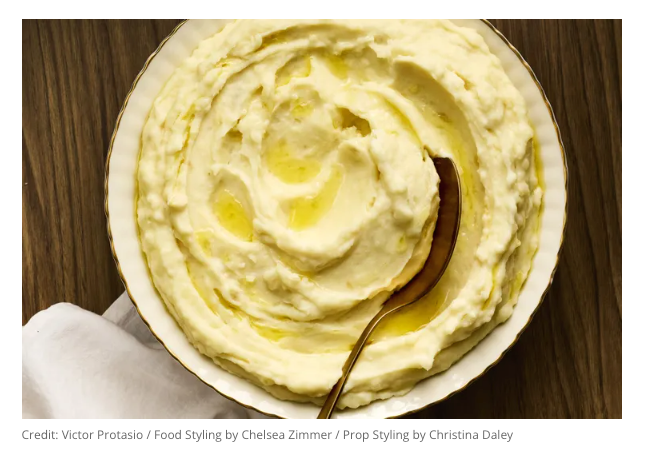
A classic side dish with a Spanish-leaning twist
Mashed potatoes are an all-time classic side dish, and part of their appeal is how adaptable they are. Small changes—like adding a tangy dairy ingredient for lift or incorporating a savory cheese for depth—can shift the flavor and texture in meaningful ways. This version, developed by chef José Andrés, leans into a luxurious, crowd-friendly style: fluffy potatoes enriched with roasted garlic, young Manchego cheese, and extra-virgin olive oil.
The approach is straightforward, but the result is intentionally indulgent. The potatoes are mashed with hot cream until light and creamy, then finished with cheese that melts into the warm mash, roasted garlic for sweetness and savoriness, and olive oil for a final layer of richness. It’s a dish that can feel elegant while still delivering the comfort people expect from mashed potatoes.
Why this method focuses on russet potatoes
Potato choice matters here. While many cooks reach for Yukon Gold potatoes as a default for mashed potatoes, this recipe specifies baking potatoes (russets). Russets are starchier than Yukon Golds, and that higher starch content is a key part of achieving a creamy, fluffy texture in this particular preparation.
The potatoes are peeled and cut into large chunks, then boiled until tender. After draining, they’re returned to the pot and briefly heated again to dry them out. That drying step is small but important: it helps drive off excess moisture so the mash can absorb the hot cream and other enrichments without becoming watery. The goal is a mash that feels light and plush, not heavy or loose.
The flavor balance: roasted garlic, Manchego, and olive oil
The flavor of these mashed potatoes hinges on balance. Roasted garlic brings a nutty sweetness and deep savoriness that’s softer and more rounded than raw garlic. Manchego contributes umami and a gentle tang that’s described as yogurt-like. Together, those elements build complexity without overpowering the potatoes.
Timing also matters. The cheese is stirred into the warm mash so it can melt and thread through every bite. The roasted garlic is mashed separately and then slowly incorporated, which helps distribute it evenly rather than leaving strong pockets. Finally, olive oil is stirred in and also drizzled on top before serving, adding a fruity, peppery finish that complements the garlic and cheese.
Ingredients
- 2 heads of garlic, top third of each cut off
- 1/4 cup Spanish extra-virgin olive oil, plus more for drizzling
- 6 pounds baking potatoes (russets), peeled and cut into 2-inch chunks
- 1/2 pound young Manchego cheese, cut into 1/4-inch dice
In addition to the ingredients listed above, the method uses water for boiling the potatoes and salt for seasoning the cooking water and the finished mash.
Step-by-step instructions
This recipe is designed to be manageable even when cooking for a group. The garlic roasts while you prepare the potatoes, and the finishing steps come together quickly once everything is hot.
- Roast the garlic: Preheat the oven to 350°. Stand the garlic on a large sheet of heavy-duty foil. Drizzle with oil and wrap in the foil. Bake for about 1 hour, until the garlic is very soft. Squeeze the soft cloves from the skins into a small bowl and mash with a fork.
- Boil the potatoes: Bring the potatoes to a boil in a large pot of water. Salt the water and boil over moderately high heat until tender, about 20 minutes.
- Drain and dry: Drain the potatoes and return them to the pot. Shake the pot over moderately high heat for 1 minute to dry the potatoes.
- Mash with hot cream: Mash the potatoes with a potato masher, then mash in half of the hot cream. Add the remaining cream and mash again.
- Add cheese, then garlic and oil: Stir in the Manchego to melt, then slowly stir in the mashed garlic and 3 tablespoons of the olive oil.
- Season and serve: Season with salt and transfer to a serving bowl. Drizzle with the remaining 1 tablespoon of olive oil and serve.
What makes the texture “ultra-creamy” here
Several small choices combine to create the “ultra-creamy” effect. First, russet potatoes provide a starchy base that mashes into a fluffy structure. Second, drying the potatoes briefly after draining reduces excess moisture, which helps the mash stay light while still absorbing the enrichments.
Next, the hot cream is incorporated in stages: half first, then the remainder. That stepwise approach helps you mash thoroughly without oversaturating the potatoes all at once. Finally, the cheese is added while the mash is warm so it melts smoothly, and the olive oil is incorporated gradually for a cohesive finish. The result is a mash that reads as creamy and luxurious, while still maintaining a fluffy, light interior.
Serving notes
These mashed potatoes are designed to work alongside many kinds of main dishes and can easily become a centerpiece on the table. The finishing drizzle of extra-virgin olive oil adds aroma and a final layer of richness right before serving, and it reinforces the Spanish character of the roasted garlic and Manchego combination.
If Spanish extra-virgin olive oil isn’t already in your pantry, this recipe specifically calls it out as worthwhile for its fruity, peppery bite. It’s used both in the garlic roasting step and as a finishing touch, so its flavor has multiple chances to show up in the final dish.
Storage and reheating
Leftovers can be stored once cooled. Keep the mashed potatoes in an airtight container in the refrigerator for up to three days. To reheat, warm them in a saucepan on the stove over low heat.
At-a-glance recap
- Signature flavors: roasted garlic, young Manchego, extra-virgin olive oil
- Key technique: dry the drained potatoes briefly in the pot before mashing
- Best texture cue: stir the cheese into warm potatoes so it melts evenly
- Make-ahead friendly: refrigerate up to three days and reheat gently on the stove
With a short ingredient list and a clear method, this José Andrés-style mash offers a rich, balanced take on a familiar side dish—one that emphasizes fluffy texture, savory depth, and a refined finish.