
Creamy Pumpkin Pasta with Toasted Hazelnuts
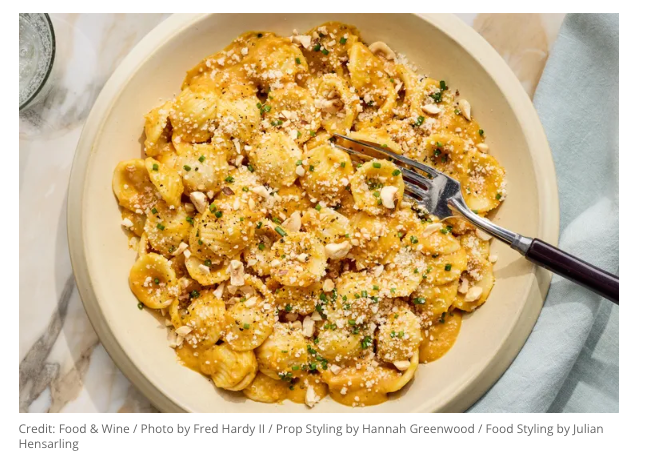
A creamy, seasonal pasta that’s both simple and special
This vegetarian pasta brings together a velvety pumpkin sauce and the crisp bite of toasted hazelnuts. The overall effect is rich and autumnal, yet the method stays approachable for a weeknight meal. Using canned pumpkin puree helps keep the timeline manageable, while the garnishes—hazelnuts and chives—add a finishing touch that feels a little more elevated than an everyday bowl of pasta.
The dish takes inspiration from the comfort of stovetop mac and cheese, but shifts the flavor profile toward earthy pumpkin and aromatic sage. Mascarpone and Parmigiano-Reggiano round out the sauce with a creamy, savory depth, and a splash of reserved pasta water helps the sauce cling to every piece of pasta.
Why orecchiette works so well here
Orecchiette is a classic Italian pasta shape from the Puglia region of southern Italy. The name translates to “little ears,” a nod to its concave, ear-like shape (typically about 3/4-inch across). That shape is not just charming—it’s functional. Orecchiette’s ridged surface and hollow center are particularly good at holding onto sauces, making it a natural match for a smooth pumpkin sauce.
If you can’t find orecchiette, farfalle is suggested as a good alternative. The key is choosing a shape that can catch and hold the creamy sauce rather than letting it slide off.
Salting the pasta water: a small step with a big role
To cook the pound of dry orecchiette used in this recipe, the recommended ratio is four quarts of water and one to two tablespoons of kosher or fine sea salt. Since most pasta dough does not contain salt, salting the water is an important opportunity to season the pasta itself, not just the sauce.
There’s also a practical benefit: salt slows the swelling of starch as pasta hits hot water, which helps produce noodles that are less sticky. That matters in a creamy dish like this, where you want the sauce to coat the pasta evenly rather than clump.
Ingredients and yield
This recipe was developed at its original yield. While ingredient amounts can be adjusted, cooking times and steps remain unchanged, and not all recipes scale perfectly. At the original scale (1X), the recipe yields 6 to 8 servings.
- Dry orecchiette pasta (1 pound), or farfalle as an option
- Hazelnuts (toasted and chopped)
- Butter
- Onion
- Garlic
- Sage
- Canned pumpkin puree
- Mascarpone
- Parmigiano-Reggiano cheese (1/4 cup freshly grated, plus more for serving)
- Chives (for garnish)
- Kosher or fine sea salt, and pepper (for seasoning)
Step-by-step method
The process is straightforward: toast the hazelnuts, cook the pasta, build a quick aromatic base with onion, garlic, and sage, then blend that base with pumpkin puree until smooth. The sauce is warmed, enriched with mascarpone and Parmigiano-Reggiano, and then tossed with pasta and reserved cooking water until glossy and well-coated.
1) Toast the hazelnuts
Preheat the oven to 375°F. Spread the hazelnuts in a pie plate and toast for about 7 minutes, until golden. Let them cool, then rub off most of the skins and roughly chop. This step adds a crunchy contrast to the creamy sauce, and the toasted flavor brings extra depth to the final dish.
2) Cook the pasta and reserve cooking water
Bring a large pot of salted water to a boil. Cook the pasta until al dente, then drain—reserving 1 cup of the cooking water. The reserved water is used later to help loosen the sauce and encourage it to cling to the pasta.
For the pasta water, the recommended guideline is four quarts of water and one to two tablespoons of kosher or fine sea salt. This helps season the pasta and can contribute to a less sticky result.
3) Build the aromatic base
While the pasta cooks, melt the butter in a medium saucepan. Add the onion, garlic, and sage, and cook over moderately low heat until the onion is softened, about 7 minutes. Keeping the heat moderately low helps soften the onion and bring out the aromatics without rushing the process.
4) Blend the pumpkin sauce until smooth
Transfer the cooked onion-garlic-sage mixture to a food processor. Add the pumpkin puree and process until smooth. Season with salt and pepper. Blending is what gives the sauce its silky texture, turning the sautéed aromatics into a unified, creamy base.
5) Heat the sauce and enrich it
Wipe out the pasta pot and scrape the pumpkin mixture into it. Cook over moderately low heat until hot. Then mix in the mascarpone and the 1/4 cup of freshly grated Parmigiano-Reggiano cheese. This is where the sauce becomes especially creamy and rich, with the cheese adding savory character.
6) Toss pasta with sauce and adjust with pasta water
Add the cooked pasta to the pot along with the reserved cooking water, tossing to coat thoroughly and heat through. Season again with salt and pepper as needed. The reserved water helps create a cohesive, glossy sauce that hugs the pasta’s curves and ridges.
7) Finish and serve
Transfer the pasta to bowls. Sprinkle the toasted hazelnuts and chives on top, and serve right away, passing additional Parmigiano-Reggiano at the table. The hazelnuts provide crunch, while chives contribute a fresh, mild finish that balances the richness.
Make-ahead note
The pumpkin sauce can be refrigerated overnight. When you’re ready to serve, reheat the sauce before tossing it with the pasta and the pasta cooking water. This option makes the dish even more practical when you want to split the work across two days while keeping the final toss and garnish fresh.
Serving experience: what to expect
This pasta is designed to feel comforting without being complicated. The sauce is smooth and creamy, with pumpkin providing a rich, earthy base. Sage, onion, and garlic add aromatic warmth, while mascarpone and Parmigiano-Reggiano deepen the savory, creamy profile. The finishing touches matter: toasted hazelnuts bring crunch and a nutty accent, and chives add a fresh contrast right at the end.
Served immediately, the dish is at its best—hot, glossy, and well-coated—making it a strong choice when you want a seasonal vegetarian meal that can still feel dinner-party appropriate while remaining realistic for a weeknight schedule.