
A Chilled Summer Gazpacho Inspired by Andalucía
Why gazpacho works so well in warm weather
Gazpacho is a popular soup from Andalucía, Spain’s southernmost region, made from raw vegetables that are blended and served chilled. It’s often enjoyed during the warm summer months, when a cold bowl can feel especially refreshing. The base is typically built from tomatoes, cucumbers, green peppers, garlic, vinegar, and olive oil, then finished with toppings that add texture and freshness.
This version highlights juicy plum tomatoes, crisp cucumber, and grassy green pepper, with tangy sherry vinegar and Spanish extra-virgin olive oil blended in for a smooth, emulsified texture. Served very cold, it’s a vibrant dish that fits sweltering nights, when turning on the stove for a full meal may feel like too much.
A classic blend with a simple, structured garnish
At its core, gazpacho is straightforward: blend the vegetables with vinegar, season, then chill. What makes it feel complete is the contrast between the silky soup and the toppings. Crunchy croutons and small pieces of seasonal vegetables—often the same ones used in the base—help bring the dish together.
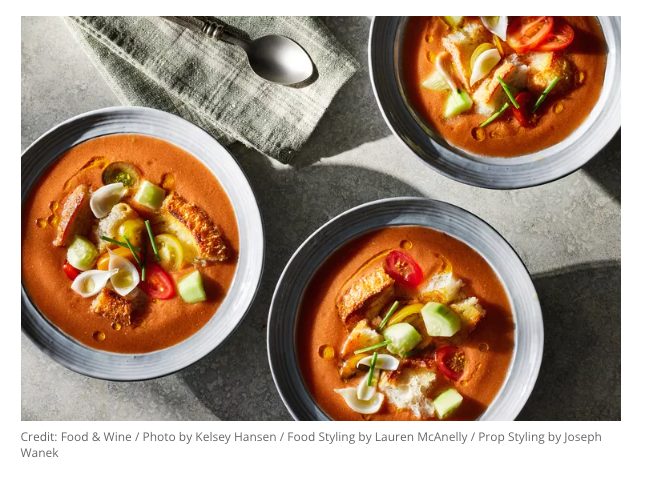
In this approach, the garnish is intentionally organized: croutons for crunch, tomato “fillets” prepared with seeds, cherry tomato halves, cucumber cubes, and pearl onion segments. A few drops of olive oil and vinegar are added directly to specific garnish elements, then everything is finished with sea salt and chives. The result is a bowl that tastes bright and layered while still being rooted in a simple set of ingredients.
Ingredients (original yield: 4 servings)
- 2 pounds ripe plum tomatoes (about 10), cut into chunks
- 1 cucumber (8 ounces), peeled and cut into chunks
- 3 ounces green pepper (1/2 medium), in large pieces
- Garlic
- Sherry vinegar (plus more as needed for balance)
- Spanish extra-virgin olive oil (1 tablespoon for blending, plus 2 tablespoons for croutons and finishing)
- Salt
- Bread (for croutons)
- 6 plum tomatoes, with the seeds, prepared as “fillets”
- 4 pearl onions, pulled apart into segments
- Cherry tomatoes, halved (for garnish)
- Cucumber cubes (for garnish)
- Sea salt (for finishing tomatoes)
- Chives (for finishing)
Note: The recipe is described at its original yield of 4 servings. Ingredient amounts may be adjusted automatically in some formats, but cooking times and steps remain unchanged, and not all recipes scale perfectly.
Method: blending and chilling the soup
In a blender, combine the chunked plum tomatoes, cucumber, green pepper, garlic, and sherry vinegar. Blend until the mixture becomes a thick liquid. Taste for acidity; the balance will vary depending on the sweetness of the tomatoes. If it doesn’t taste balanced, add a little more vinegar.
Add 1 tablespoon of Spanish extra-virgin olive oil, season with salt, and blend again. Strain the gazpacho into a pitcher and refrigerate for at least half an hour. The goal is to serve it when it’s refreshingly chilled.
Method: quick croutons for crunch
In a small pan, heat 2 tablespoons of Spanish extra-virgin olive oil over moderately high heat. Fry the bread until golden, about 2 minutes. Break the fried bread into small pieces to form croutons, then set aside.
How to assemble each bowl
To serve, pour the chilled gazpacho into each of 4 bowls. Add the garnishes in a consistent mix so every serving has the same textures and flavors.
- Place 4 croutons into each bowl.
- Add 2 tomato “fillets” (with seeds) to each bowl.
- Add 4 cherry tomato halves to each bowl.
- Add 3 cucumber cubes to each bowl.
- Add 3 onion segments to each bowl.
Finish the garnishes with small, targeted touches: add a few drops of olive oil to each onion segment and drizzle a little more around each bowl. Add a few drops of vinegar to each cucumber cube and drizzle a little more around each bowl. Sprinkle sea salt on the tomatoes and sprinkle chives over the soup. Serve immediately while the soup is very cold.
Understanding the flavor balance: tomatoes and vinegar
One of the most important steps is tasting for acidity after the first blend. The sweetness of ripe tomatoes can vary, and that changes how much sherry vinegar is needed for the soup to taste balanced. The method is intentionally flexible: blend, taste, then add a little more vinegar if needed. This keeps the final result bright without becoming harsh.
Olive oil is blended in after the acidity is adjusted, helping emulsify the mixture into a richer, smoother texture. Salt is added at the end of blending to bring the flavors into focus.
Adjusting texture if the soup feels too loose
If the consistency turns out too watery or loose, the soup can be thickened quickly by blending in more vegetables. Another option is to add a few chunks of leftover bread to the blender, which can help thicken the gazpacho for a richer, smoother texture. Add your chosen thickening ingredient gradually until you reach the consistency you want, then adjust seasoning as needed.
Optional variations and time-saving ideas
For a more avant-garde take, yellow or green tomatoes can be added into the mix. If you want to simplify the finishing step, the garnishes can be pared down; a few cubes of cucumber, tomato, and green pepper can be enough to give the bowl texture and freshness without extra prep.
Make-ahead, storage, and freezing
One practical advantage of gazpacho is how well it fits into a make-ahead plan. The soup base can be blended in advance and stored in an airtight, nonreactive container in the refrigerator for up to three days. If the soup begins to separate, reblend it or stir it well to emulsify the ingredients again.
For best results, hold off on adding garnishes until you’re ready to serve. This keeps toppings crisp and prevents them from softening in the soup.
Gazpacho can also be frozen in a freezer-safe, airtight container or an ice cube tray for three to six months. Keep in mind that freezing may affect consistency and flavor over time.
A note on tradition and context
Andalucía may be widely known for sherry and cured ham, but it is also often described as the cold-soup capital of the world thanks to gazpacho. This chilled soup is built for a warm Mediterranean climate, and its popularity makes sense: it’s cooling, vegetable-forward, and adaptable to what’s in season.
There is also a personal story often shared about this particular gazpacho: rumor has it that Spanish-American chef José Andrés fell in love with Patricia Fernandez de la Cruz—an Andalucía native and his now-wife—thanks to this very recipe. Whether or not you focus on the story, the bowl itself is easy to appreciate: rich, creamy in texture from blending and emulsifying, and refreshing when served cold.
Serving suggestion: keep it cold, keep it crisp
The final detail is temperature. Chill the strained soup for at least 30 minutes, then assemble bowls just before serving. With cold gazpacho, crunchy croutons, and bright garnishes finished with olive oil, vinegar, sea salt, and chives, the dish delivers the contrast that makes gazpacho such a reliable summer staple.