
Arroz con Pollo with Mushrooms: A Skillet Chicken-and-Rice Dish with Spanish Rice, Saffron, and Smoked Paprika
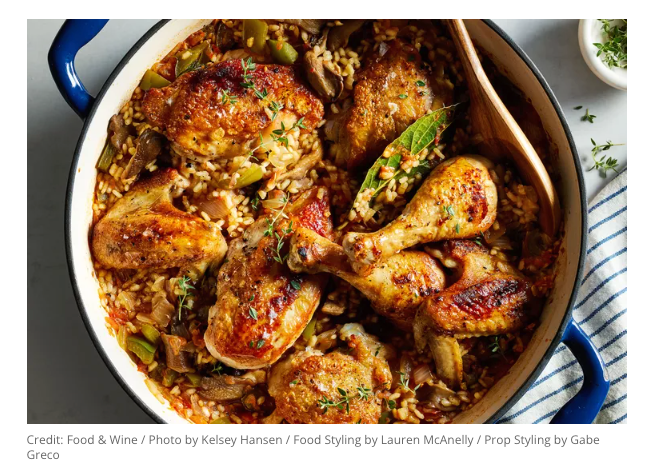
A wide-skillet arroz con pollo with mushrooms
Arroz con pollo—chicken with rice—is a classic, widely loved dish with many regional expressions across Latin America, Spain, and the Caribbean. This version, from chef José Andrés, leans into a paella-like approach: it is cooked in a very large, deep skillet that evokes a paella pan, creating a dish designed to be served directly from the pan. The result is meant to be both practical and visually appealing, with one reader describing the presentation as a “big reveal” that “always makes a splash.”
What sets this take apart is its streamlined technique and its flexible framework. The recipe is described as easy and super-versatile, while still delivering a distinct aroma and flavor profile. A small amount of sweet pimentón de la Vera (smoked Spanish paprika) gives the rice a lightly smoky character, and a few threads of saffron contribute color and a subtle floral note. Mushrooms—either cremini or oyster—add texture and savory heft, making the dish feel more substantial without complicating the method.
Why mushrooms work especially well here
Cremini or oyster mushrooms are included not as a garnish, but as an integral part of the rice base. Cooked after the tomato mixture reduces, the mushrooms soften and contribute a deeper savory character to the pan. Because the dish is cooked in a wide skillet and finished without stirring, the mushrooms become part of the overall texture of the rice rather than a separate topping.
The recipe also leaves room to adjust the mushroom choice depending on what is available. If fresh wild mushrooms are in season—typically fall or late winter and spring—varieties like chanterelles or morels can be used. The core concept remains the same: mushrooms provide a hearty, earthy counterpoint to chicken, smoked paprika, and saffron.
Rice choice: bomba or Calasparra
A key detail in this preparation is the rice. Andrés calls for one of two specific Spanish varieties: bomba rice (sometimes called “Valencia rice”) or Calasparra rice. Both are grown in eastern regions of Spain and are known for their short, round grains and high absorbency. That absorbency is especially useful in paella-style dishes and similar skillet rice preparations, where the grains are expected to take on flavor from the cooking liquid and aromatics.
Both bomba and Calasparra have Denominación de Origen Protegida (DOP) status in Spain, reflecting their recognized regional identity. In practical terms for the cook, these rices are chosen because they can absorb liquid while maintaining their structure, helping the finished dish land in the tender-yet-distinct range that is associated with paella-inspired methods.
Ingredients used in this version
This dish builds flavor in layers: browning the chicken, sautéing vegetables, blooming spices and herbs, reducing grated tomato, softening mushrooms, and then cooking the rice and chicken together until done. The ingredient list below reflects the items specified, along with the key aromatics and seasonings used in the method.
- 1 (3 1/2-pound) chicken, cut into 8 pieces
- 1 medium green bell pepper, finely chopped
- 1/2 teaspoon sweet pimentón de la Vera (smoked Spanish paprika)
- 1/2 pound oyster or cremini mushrooms, cut into 1-inch pieces
- Onion (used in the cooking method)
- Garlic (used in the cooking method)
- Thyme sprigs (used in the cooking method)
- Bay leaf (used in the cooking method)
- Tomatoes, grated on a box grater (used in the cooking method)
- Water (used in the cooking method)
- Rice (bomba or Calasparra, as described)
- Saffron (used in the cooking method)
- Olive oil (used in the cooking method)
- Salt and pepper (used throughout)
- Hot sauce, for serving
Step-by-step method (skillet, paella-style)
The overall approach is straightforward: brown the chicken, build a vegetable-and-tomato base, add mushrooms, then simmer rice and finish cooking the chicken nestled into the grains. The recipe emphasizes cooking the rice without stirring once the chicken is returned to the pan, which aligns with the paella-like skillet presentation.
- Grate the tomatoes: Working over a bowl, grate the cut side of the tomatoes on the large holes of a box grater; discard the skins.
- Brown the chicken: In a very large, deep skillet, heat the olive oil until shimmering. Season the chicken with salt and pepper, add it to the skillet skin side down, and cook over moderate heat, turning once, until nicely browned on both sides. Transfer the chicken to a plate.
- Cook the vegetables: Pour off all but 2 tablespoons of the fat from the skillet. Add the onion and green pepper, season with salt, and cook over moderate heat, stirring occasionally, until just starting to brown, about 10 minutes.
- Bloom aromatics and spices: Add the garlic, thyme sprigs, bay leaf, and pimentón and cook, stirring, until fragrant, about 2 minutes.
- Reduce the tomato: Add the grated tomatoes and cook, stirring, until the liquid has evaporated, about 5 minutes.
- Soften the mushrooms: Stir in the mushrooms and cook over moderately high heat until they start to soften, about 3 minutes.
- Add water and rice: Add the water to the skillet and bring to a boil. Stir in the rice, saffron, and a generous pinch of salt and return to a boil.
- Finish with chicken nestled into the rice: Nestle the chicken in the rice and cook over moderately low heat, without stirring, until the rice is tender and the chicken is cooked through, 20 to 25 minutes.
- Remove herbs and season: Discard the thyme sprigs and bay leaf. Season the dish with salt and pepper and serve with hot sauce.
Flavor profile: smoky, lightly fragrant, and savory
This arroz con pollo is described as lightly fragrant and smoky. The smokiness comes from sweet pimentón de la Vera, a smoked Spanish paprika associated with Spain’s Extremadura region. The saffron contributes both color and a subtle floral aroma, giving the rice a distinctive look and a gentle aromatic lift.
Texture is an important part of the appeal. The chicken is browned before it finishes cooking in the rice, and the mushrooms add chew and depth. The grated tomato base is cooked until its liquid evaporates, concentrating flavor before the water and rice are added. Together, these steps create a cohesive skillet dish that is designed to be served as a centerpiece.
Context: a dish with many regional variations
Arroz con pollo is a beloved preparation with many traditional versions. Different regions and countries have their own approaches, and even the way the rice is colored can vary. Some cooks prefer annatto instead of saffron. In Panama, it is common to see green olives and raisins served alongside the rice and chicken. These examples illustrate how adaptable the dish is while still remaining recognizable as chicken and rice cooked together.
It is difficult to pinpoint where arroz con pollo was first created. The dish bears some resemblance to Spanish paella, and it also echoes pilafs introduced during Muslim rule in the Iberian Peninsula. That historical overlap helps explain why a paella-style skillet method feels natural for a modern version like this one.
Ways to adapt the recipe while keeping its core character
One of the defining traits of this recipe is how easily it can accommodate modifications. The structure—browned protein, vegetable base, tomato reduction, mushrooms, then rice simmered in liquid—creates a template that can be adjusted without losing the essence of the dish.
- Swap the protein: Rabbit can be substituted for the chicken for a more distinctive variation while keeping the same overall method.
- Change the mushrooms: When wild mushrooms are in season (typically fall or late winter and spring), varieties such as chanterelles or morels can be added.
Even with these changes, the key features remain consistent: a wide-skillet presentation, a rice chosen for absorbency, and the signature accents of smoked paprika and saffron.
Serving and presentation
This dish is meant to be served straight from the skillet, emphasizing the dramatic, communal feel associated with paella-style cooking. After cooking, the thyme sprigs and bay leaf are discarded, and the final seasoning is adjusted with salt and pepper. Hot sauce is served alongside, allowing each person to add heat to taste.
Because the chicken is nestled into the rice and the pan is brought to the table, the final presentation highlights the browned pieces of chicken against saffron-tinted rice, with mushrooms and vegetables distributed throughout. It is a simple approach that aims for a memorable entrance without requiring elaborate plating.