
A Taste Test of 6 National Pizza Chains: What Stood Out, What Fell Flat, and Why One Won
Pizza is one of those foods people rarely feel neutral about. Everyone has a “real pizza” origin story: a neighborhood spot, a regional style, a college-era slice that tasted better because it was cheap and always available. For one New York-based office taste test, that personal history mattered—not as a scoring factor, but as a reminder that judging pizza is never just about hunger. It’s about expectations: what you think a crust should feel like, how sweet you want the sauce, and whether you consider grease a flaw or part of the charm.
The tester behind this comparison came to the table with a broad pizza education. They grew up outside Chicago eating tavern-style pies (with a clear preference for that style over deep dish) and later lived in New York, where thin, foldable, budget-friendly slices were a daily staple. With that background, the goal wasn’t to crown the best pizza in the world. It was more practical: identify the strongest national chain option—something reliable when local favorites aren’t available.
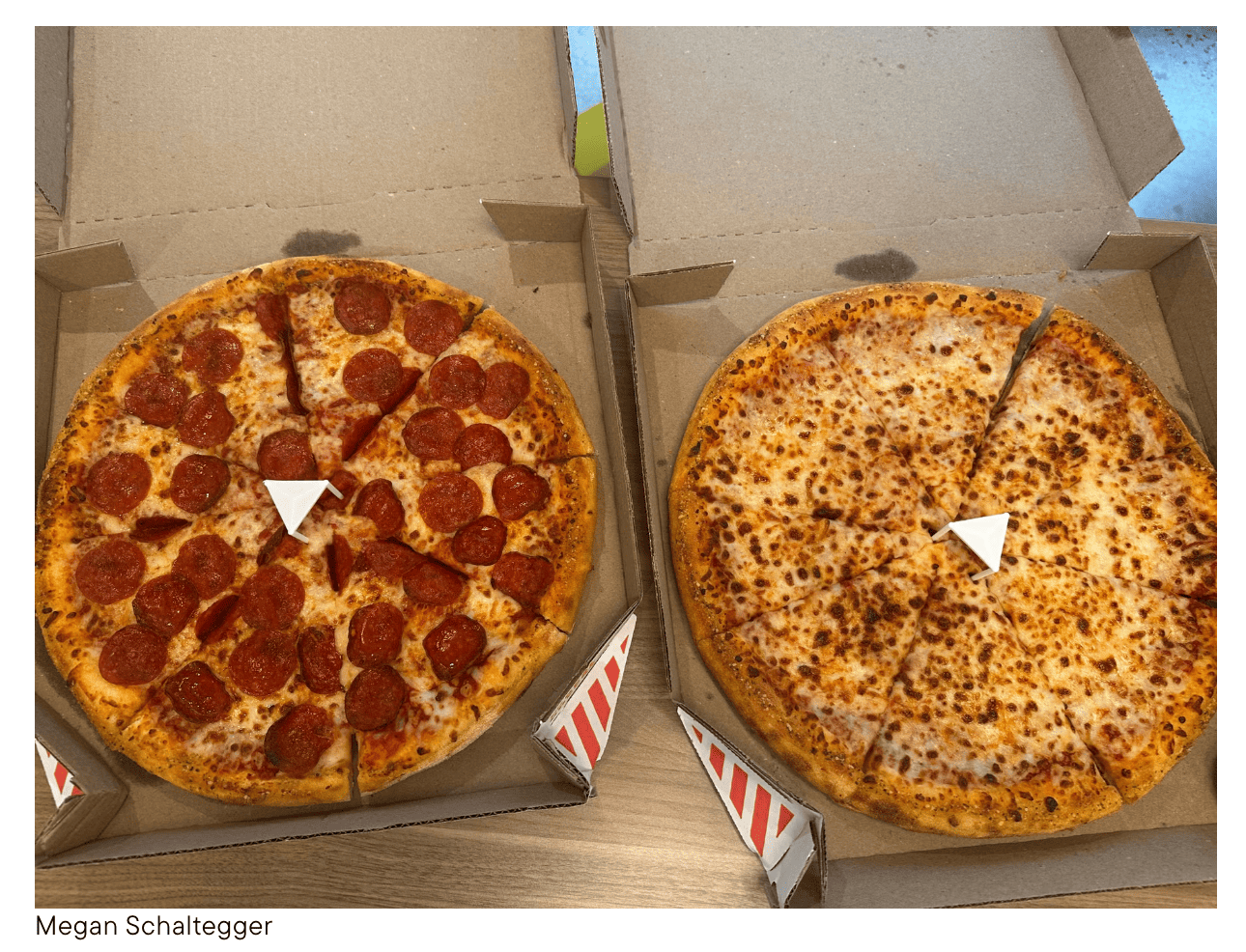
To do it, the tester gathered co-workers for a structured tasting. The group ordered from six recognizable chains available to them in New York: Domino’s, Pizza Hut, Papa John’s, Little Caesars, Sbarro, and Jet’s. Each participant tried what they could and scored both cheese and pepperoni slices. Afterward, the scores were tallied into a final ranking. The outcome, by the tester’s own description, was “low-key surprising.”
How the office taste test worked
This wasn’t a lab experiment, but it wasn’t a casual “grab a slice” situation either. The tasting was organized around consistency: the same general slice types (cheese and pepperoni) across the chains, and a shared scoring approach across multiple tasters. That matters because pizza can be intensely subjective. A single person might overvalue nostalgia or underweight texture. A group, while still subjective, tends to surface patterns—especially around crust, sauce, and how the whole slice eats.
It also matters that the tasting happened in New York, and not every chain or style variation was available. Jet’s, for example, is known for Detroit-style pizza, but the group ordered its New York thin-crust option to keep the comparison aligned. Delivery was part of the real-world test too: pizzas arrived via delivery, which can affect presentation and texture. In other words, this ranking reflects how these chains performed as takeout pizza in this setting.
Chains included: Domino’s, Pizza Hut, Papa John’s, Little Caesars, Sbarro, Jet’s
What was tasted: Cheese and pepperoni slices
How it was judged: Multiple tasters scored slices; results were tallied into a final ranking
6) Little Caesars: crunchy crust, but not enough support to rise
Little Caesars entered the tasting with a reputation built on speed and value—“cheap,” “fast,” and famously branded with “Pizza! Pizza!” In the office, it did have supporters. One person specifically called out the crust, saying it “has a really nice crunch that none of the others have.” That’s not a small compliment in a lineup where crust texture can make or break the bite.
Still, despite a few fans, there weren’t enough high scores to push it into the top five. That doesn’t mean it was inedible or disliked across the board; it simply suggests that, in this particular side-by-side comparison, its strengths didn’t outweigh what other chains delivered in overall balance and crowd appeal.
5) Sbarro: nostalgic, hot on arrival, and a sauce people noticed
Sbarro’s presence in the lineup carried a specific kind of cultural baggage: it’s the classic mall food court staple. But in this test, it wasn’t treated as a joke entry. In New York, it also delivers, and the pizza arrived hot—an advantage in any takeout comparison.
The tasting notes leaned heavily into nostalgia, but the feedback wasn’t only sentimental. Tasters noticed the sauce in particular, describing it as “pleasantly sweeter,” and they also called the crust “pretty crisp.” One taster summed up the overall slice experience as “really good,” praising “delicious sauce (not too much) and cheese.” Another observation captured Sbarro’s particular appeal: it’s “greasy but somehow works.”
That last line matters because it acknowledges a reality of chain pizza: a certain level of grease is expected. The question is whether it feels heavy or whether it integrates into the experience as part of the flavor and texture. In this case, the grease didn’t sink the slice—it became part of what made it satisfying.
4) Jet’s: a middle-of-the-pack showing, with mixed reactions
Jet’s is widely associated with Detroit-style pizza, and the tester even noted they love that style. But for fairness and consistency, the group ordered Jet’s New York thin-crust option. That choice made the comparison cleaner, but it also meant Jet’s wasn’t being judged on its signature format.
Delivery also played a role here. The pizza arrived “looking a little disheveled from the transit,” which can influence first impressions and even how a slice holds together. Reactions were divided: some participants “gushed,” while others were “somewhat underwhelmed.” When the scores were tallied, the consensus placed Jet’s in the middle of the pack.
In a ranking like this, “middle of the pack” can mean the pizza did nothing wrong but didn’t generate consistent enthusiasm. It may also signal that the thin-crust format didn’t showcase what some people love about the brand.
3) Pizza Hut: a doughier crust that won over more people than expected
Pizza Hut’s performance came with a bit of a narrative twist. The office had fans ready to support it—or, as the tester put it, maybe Pizza Hut simply “showed out.” Either way, it landed high enough to be considered a top-tier option in this lineup.
The biggest talking point was the crust. It was described as “doughy,” and not everyone was in the mood for that style. One person said they had to “be in the mood” for it, which is a fair critique: a thicker, softer bite can feel comforting one day and heavy the next. But for others, the crust was the selling point. One staffer said it “tastes like focaccia,” while others called it “light and fluffy” with a “good flavor.” The sauce also stood out as “sweet.”
There was also an emotional undercurrent to Pizza Hut’s placement. The tester referenced childhood memories—birthday parties and classroom celebrations—suggesting that the chain still delivers a recognizable experience that many people are happy to revisit. In this tasting, it wasn’t just nostalgia; the flavor and texture held up well enough to earn a strong ranking.
2) Domino’s: flavorful crust, fresh-tasting cheese, and a strong fan base
Domino’s entered the tasting with “vocal fans” in the office, and the slices gave them plenty to defend. The group praised the crust as “packed with flavor,” and the cheese as tasting “fresh.” Perhaps most importantly, the overall texture balance worked: the pizza hit a sweet spot “between doughy and crispy.” In chain pizza, where crust can be bland or overly bready, that balance can be a major advantage.
Tasters didn’t hold back. One said Domino’s has “always been my go-to takeout pizza.” Another said the crust “always hits the spot.” A separate comment called out a “garlicky punch,” suggesting that seasoning and aroma were part of Domino’s appeal in this lineup. And one taster went as far as to describe the thin crust as “god’s gift”—an over-the-top compliment, but notable because it reflects genuine enthusiasm rather than polite approval.
Domino’s finished near the top, and the tester noted it came close to winning. In a group setting, that usually means it performed consistently well across multiple categories rather than excelling in only one.
1) Papa John’s: the winner on freshness, presentation, and built-in extras
When the scores were tallied, Papa John’s took the top spot. According to the tester, it won on “presentation, flavor, and freshness.” In a delivery-based taste test, those three factors can be decisive. A pizza can taste good, but if it arrives looking rough or feels stale, it loses points quickly in a side-by-side lineup.
Papa John’s also benefited from something that isn’t exactly part of the slice itself, but absolutely shapes the eating experience: the included pepperoncinis and garlic sauce. The tester described these as giving the chain “an edge alone,” especially because they arrive automatically—no need to request them. In a comparison of national chains, that kind of consistent add-on can be a meaningful differentiator, turning a basic slice into a more complete takeout “package.”
Tasters echoed the top ranking with direct praise. One fan described a Papa John’s slice as “very cheesy” with “good flavor.” Another framed it as an ideal takeout choice: “I think Papa John’s is the perfect take-out pizza—the peppers, the garlic sauce, the crust.”
Interestingly, the tasting notes also highlight a stylistic contrast with Domino’s. While Domino’s crust was praised for its garlicky, herby character, Papa John’s earned loyalty for the “simplicity” of its “plain bready crust.” That’s a useful reminder that “best” doesn’t always mean the most aggressively flavored. Sometimes a straightforward crust provides a neutral base that people prefer—especially when paired with dipping sauce and pepperoncinis that let each bite be customized.
One staffer summed up the office consensus with a definitive statement: “The best pizza chain ever.” In the context of this test, that enthusiasm aligned with the final ranking.
What this ranking suggests about chain pizza preferences
Even without publishing numeric scores, the tasting notes make a few patterns clear. First, crust texture and flavor were central to how people judged slices. Little Caesars earned a specific crust compliment for crunch, Pizza Hut’s doughy crust divided the room, Domino’s crust was repeatedly praised for flavor and garlic notes, and Papa John’s won despite (or because of) a simpler crust profile.
Second, sauce sweetness came up more than once. Sbarro’s sauce was described as sweeter in a positive way, and Pizza Hut’s sauce was called sweet as well. That suggests sweetness can be a comfort factor for some tasters, especially when balanced with cheese and a crisp or fluffy crust.
Third, the “takeout experience” mattered. Papa John’s extras were a real advantage, and Jet’s presentation suffered due to transit. In a world where many people encounter these chains through delivery, the best chain isn’t only the one with the best recipe—it’s the one that arrives in the best condition and feels like a complete order.
The full ranking at a glance
1) Papa John’s
2) Domino’s
3) Pizza Hut
4) Jet’s
5) Sbarro
6) Little Caesars
Bottom line
In this New York-based office taste test of six national pizza chains, Papa John’s emerged as the clear winner, with Domino’s close behind. The deciding factors weren’t mysterious: tasters responded to flavor, freshness, and how the pizza performed as takeout. Papa John’s sealed the top spot with a combination of strong slice quality and the built-in advantage of pepperoncinis and garlic sauce—small extras that, in a side-by-side comparison, made a noticeable difference.
For anyone looking for a dependable chain option, the ranking also shows there’s no single “right” preference. Some people prioritize a garlicky, seasoned crust; others want a simpler base with customizable add-ons. But when this group compared cheese and pepperoni slices head-to-head, Papa John’s delivered the most complete, crowd-pleasing package.